




🌿 Quiet Observation
Ancient people learned meditation through quiet observation—watching nature, breathing, sensations, thoughts, and the world around them.
🌸 Experience Quiet Observation
🔊 Volume:
What Did They Observe?
🌅 Nature
People could sit quietly and observe sunrise, sunset, trees, rivers, mountains, animals, and changing seasons.
🌬️ Breathing
By becoming aware of natural breathing, they could notice the rhythm of inhalation and exhalation.
🧘 Body
They could observe physical sensations such as tension, relaxation, warmth, movement, and stillness.
💭 Thoughts
Quiet observation helped people notice thoughts and emotions without immediately reacting to them.
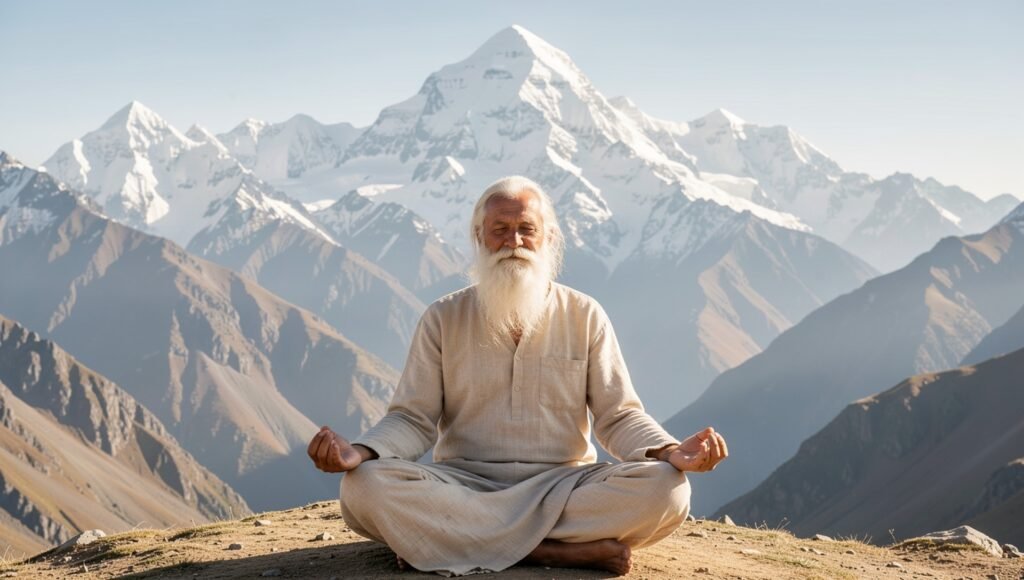
Ancient people learned meditation through quiet observation
History and Purpose of Meditation
Explore the ancient origins of meditation, its development across different cultures, and the purposes that continue to make it meaningful today.
What Is Meditation?
Meditation is a practice that involves intentionally directing attention, awareness, or concentration. Depending on the tradition, meditation may focus on breathing, a sound, a phrase, an object, bodily sensations, thoughts, or present moment awareness.
Meditation has been practiced for thousands of years and has developed in many different cultural and spiritual traditions. Although its methods vary, many forms of meditation encourage greater awareness, mental steadiness, reflection, and relaxation.
A Brief History of Meditation
Some of the earliest written records describing contemplative practices come from ancient Indian traditions. Meditation became associated with concentration, self-observation, spiritual inquiry, and the search for deeper understanding.
Meditation developed as an important component of several Hindu philosophical and spiritual traditions. Practices involving concentration, breath awareness, mantra, and contemplation became established over centuries.
Buddhist traditions developed numerous meditation methods. Practices such as mindfulness and focused concentration became important tools for understanding the mind, developing awareness, and cultivating compassion and equanimity.
Meditation also developed in Chinese philosophical and spiritual traditions. Taoist practices emphasized stillness, breathing, awareness, and harmony, while later Chan Buddhism developed distinctive approaches to meditation.
Buddhist meditation traditions spread to many parts of Asia, including Tibet, Korea, Japan, Southeast Asia, and other regions. Different cultures developed their own methods, terminology, and meditation traditions.
During the 19th and 20th centuries, meditation practices became increasingly known outside their traditional cultural settings. In recent decades, mindfulness and other meditation practices have also been studied and adapted for secular settings.
The Purpose of Meditation
The purpose of meditation differs according to the tradition and the individual. For some people, meditation is primarily spiritual. For others, it is a way to develop attention, self-awareness, calmness, or a regular reflective habit.
1. Developing Awareness
Meditation can encourage people to notice their thoughts, emotions, sensations, and surroundings with greater awareness.
2. Improving Concentration
Concentration-based practices train the mind to return attention to a chosen object, such as the breath, a mantra, or a sound.
3. Encouraging Relaxation
Many people use meditation as part of a relaxation routine. Slow breathing and quiet attention may help create a calm period during the day.
4. Understanding the Mind
Meditation can provide an opportunity to observe mental habits without immediately reacting to every thought or feeling.
5. Supporting Personal Growth
Regular practice may encourage qualities such as patience, self-reflection, emotional awareness, compassion, and mental discipline.
6. Spiritual Development
In many traditional systems, meditation is part of a broader spiritual path involving ethical living, contemplation, wisdom, prayer, or liberation.
Meditation in the Modern World
Today, meditation is practiced in homes, schools, workplaces, wellness programs, and religious communities. Some modern approaches focus primarily on mindfulness, relaxation, concentration, or stress management rather than religious beliefs.
Modern meditation does not represent a single method. Instead, it includes many approaches that have different origins, techniques, and goals. Beginners can choose a simple practice that fits their needs and gradually develop a consistent routine.
Why Learn About the History?
Understanding the history of meditation helps explain why there are so many different meditation techniques today. Learning about their origins can also encourage respectful appreciation of the cultures and traditions from which these practices developed.
- It explains the diversity of meditation techniques.
- It provides cultural and historical context.
- It helps distinguish traditional and modern approaches.
- It encourages thoughtful and respectful practice.
- It helps learners choose a meditation method that suits their goals.
Learn More About How to Meditate
For practical guidance on meditation techniques and developing a meditation practice, explore the related ebook.
Read the Ebook: How to Meditate

