




Panda conservation helps people understand the importance of protecting wildlife and nature.
Module 1 — Introduction to Pandas
What is a giant panda?
A giant panda is a large black-and-white bear native to the mountain forests of central China. It is famous for its round body, black ears, black eye patches, and strong love of bamboo. Giant pandas spend much of their day eating bamboo and resting. In the wild, a giant panda usually lives for about 15–20 years, while pandas living under human care can often live 20–30 years or more. Giant pandas generally reach adulthood at around 4–6 years of age.
You can discover that an animal is a giant panda by looking for several distinctive features. A giant panda has black-and-white fur, with black ears, black patches around its eyes, black shoulders and legs, and a mostly white face and body. It has a round head, short tail, large paws, and a stocky body. Giant pandas are also strongly associated with bamboo, which makes up most of their diet. If you observe an animal with these physical features living in or near the mountain forests of central China and eating bamboo, it is likely to be a giant panda.
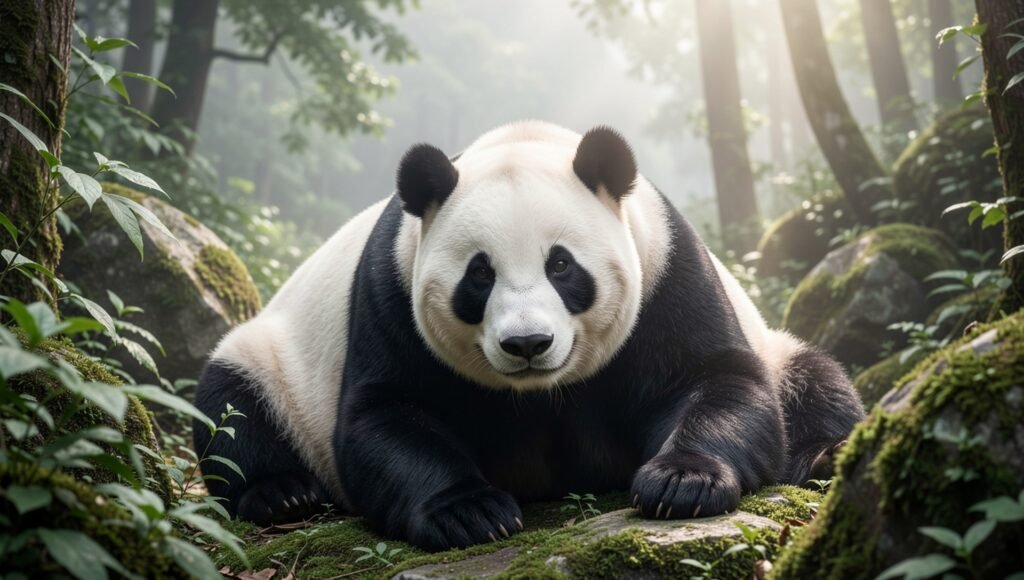
Giant pandas are strongly associated with bamboo
🐼 What Is a Giant Panda?
A giant panda is a large black-and-white mammal famous for its gentle appearance, distinctive coloring, and love of bamboo. Giant pandas are native to the mountain forests of central China.
What Does a Giant Panda Look Like?
Giant pandas have a distinctive black-and-white coat. Their ears, eye patches, shoulders, legs, and parts of their bodies are black, while much of their face and body is white. They have strong jaws and large teeth adapted for crushing bamboo.
Where Do Giant Pandas Live?
Giant pandas live mainly in cool, mountainous forest areas in central China. These forests contain large amounts of bamboo, which is the panda’s primary food.
Giant pandas spend much of their day eating bamboo because bamboo provides relatively little energy compared with many other foods.
What Do Giant Pandas Eat?
Bamboo makes up most of a giant panda’s diet. Pandas eat different parts of bamboo, including stems, leaves, and shoots. Although pandas belong to the order of carnivores, their diet is primarily plant-based.
- Bamboo stems
- Bamboo leaves
- Bamboo shoots
- Occasionally other plant material and small food items
Why Are Giant Pandas Important?
Giant pandas are an important part of China’s natural heritage. Protecting panda habitat also helps protect forests and other species that share the same ecosystem.
Conservation programs have helped improve the status of giant pandas, but protecting their habitat and maintaining healthy bamboo forests remain important.
How Can We Help Protect Giant Pandas?
- Protect natural forests and wildlife habitats.
- Support responsible wildlife conservation programs.
- Learn about endangered and vulnerable species.
- Reduce activities that damage natural ecosystems.
- Teach children to respect wild animals and their habitats.
Learn More Through DIY Activities
You can explore hands-on science and nature activities through the DIY section of The Science Online.
Explore DIY Science Activities

