




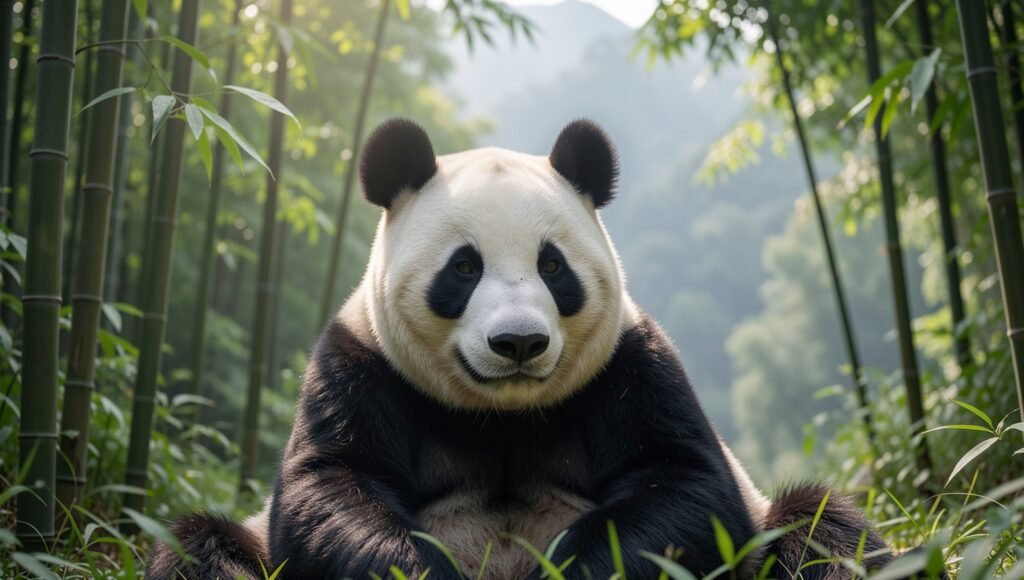
Why Pandas Need Specialized Protection
Giant pandas are unique animals with specialized dietary, habitat, behavioral, and reproductive needs. Protecting them requires more than simply providing food and shelter. Conservation programs must carefully manage their environment, health, nutrition, breeding, and interaction with humans.
1. Pandas Have Specialized Dietary Needs
Giant pandas depend heavily on bamboo for food. Although bamboo is abundant in some areas, it has relatively low nutritional value, so pandas spend many hours eating and processing large quantities. Protection programs must ensure that pandas have access to suitable bamboo and other appropriate foods.
2. They Depend on Suitable Forest Habitat
Pandas need forest environments that provide food, shelter, water, and opportunities for natural movement. Habitat loss and fragmentation can isolate panda populations. Specialized conservation therefore focuses on protecting and restoring connected mountain forests.
3. Pandas Have Unique Health Requirements
Pandas require knowledgeable veterinary care because their anatomy, diet, digestion, and behavior are different from those of many domestic animals. Wildlife professionals monitor their health, nutrition, injuries, and general condition without unnecessarily disturbing them.
4. Reproduction Can Be Challenging
Giant pandas have a relatively short reproductive period, and successful reproduction requires careful monitoring. Conservation specialists may observe reproductive behavior, monitor pregnancy, and provide appropriate care for mothers and cubs.
5. Pandas Are Sensitive to Human Disturbance
Excessive noise, crowds, inappropriate feeding, or frequent human contact can interfere with natural animal behavior. Specialized protection aims to minimize unnecessary disturbance and allows pandas to maintain natural behaviors whenever possible.
Key Areas of Specialized Protection
🌿 Habitat
Protecting bamboo forests and maintaining suitable wildlife corridors are essential for long-term panda conservation.
🎋 Nutrition
Pandas need carefully managed food supplies that support their nutritional requirements.
🩺 Veterinary Care
Trained wildlife veterinarians monitor health and respond to illness or injury when necessary.
🐼 Cub Care
Panda mothers and young cubs require particularly careful observation and protection during early development.
🌳 Natural Behavior
Conservation programs should encourage natural movement, foraging, climbing, resting, and social behaviors.
🔬 Scientific Monitoring
Researchers use observation and scientific data to improve conservation strategies and understand panda populations.
Protection Is More Than Keeping a Panda Safe
Specialized panda protection means creating conditions in which pandas can remain healthy and behave naturally. It combines habitat conservation, nutrition, veterinary science, reproduction research, environmental management, and responsible human interaction.
How People Can Help
- Support reputable panda and wildlife conservation programs.
- Learn about panda habitats and conservation challenges.
- Avoid activities that disturb wild pandas or their habitat.
- Never attempt to keep a wild panda as a household pet.
- Encourage protection of forests and biodiversity.
- Share accurate information about responsible wildlife care.
Learn More About Panda Care
For a broader guide to panda care, habitat, nutrition, safety, and responsible human interaction, explore the ebook page.
Read: How to Take Care of a Panda

