




Module 3 — Creating a Safe Habitat
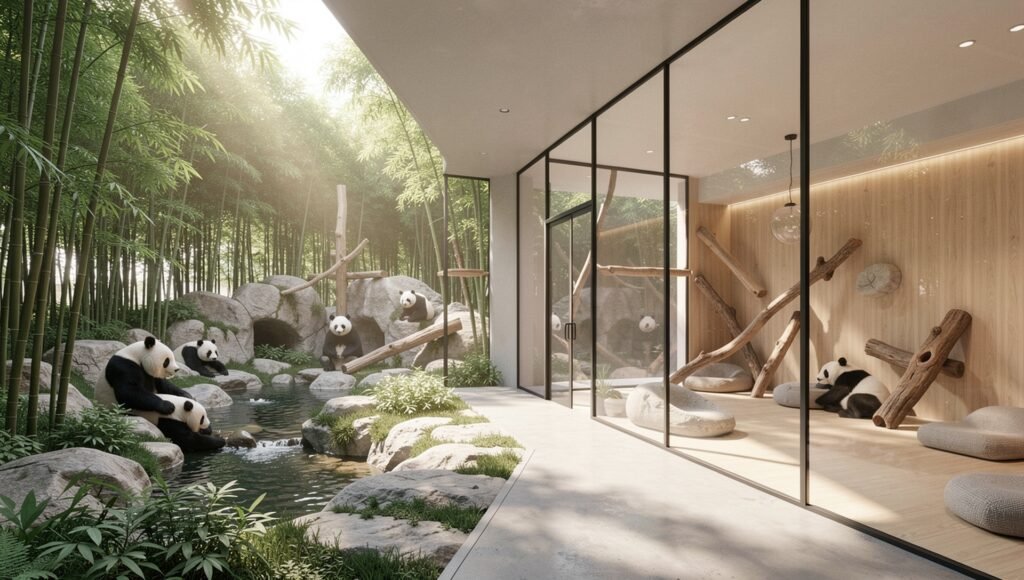
Indoor and Outdoor Enclosure Design for Pandas
Designing a panda enclosure requires careful attention to space, safety, vegetation, climate, enrichment, and opportunities for natural behavior.
Why Enclosure Design Matters
Giant pandas have specialized environmental and behavioral needs. A suitable enclosure should provide enough space for movement, climbing, resting, feeding, exploration, and privacy. Good enclosure design should also allow caretakers to monitor the animal while giving the panda opportunities to make choices and behave naturally.
In professional facilities, indoor and outdoor areas are normally designed as connected spaces. The indoor area can provide shelter and controlled environmental conditions, while the outdoor habitat can offer natural vegetation, shade, varied terrain, and enrichment opportunities.
Indoor Enclosure Design
An indoor enclosure should be secure, cleanable, well ventilated, and comfortable. It should not simply be an empty room. Different areas can provide opportunities for feeding, resting, observation, and enrichment.
Resting Area
Provide quiet resting locations where the panda can retreat from visitors, staff activity, and other disturbances. Platforms and suitable resting structures can encourage natural resting behavior.
Feeding Area
Feeding spaces should be easy to clean and arranged so food can be presented safely. Bamboo and other approved foods can be distributed in ways that encourage natural foraging.
Climate Control
Indoor areas should provide appropriate temperature, humidity, airflow, and shade. Cooling systems may be important in warm climates because giant pandas are adapted to relatively cool mountain environments.
Keeper Access
Design should include secure keeper areas, service corridors, gates, and transfer systems that allow staff to work without unnecessary direct contact with the panda.
Outdoor Enclosure Design
An outdoor enclosure should provide a stimulating environment that allows the panda to explore and move between different areas. Naturalistic landscaping can include vegetation, rocks, slopes, logs, shaded locations, and other safe structures.
Natural Vegetation
Safe vegetation and bamboo planting can make the habitat more naturalistic and provide opportunities for feeding and exploration. Plants must be selected and maintained under professional animal-care guidance.
Shade and Shelter
Shaded areas and sheltered structures allow the panda to move away from direct sunlight, rain, or other environmental conditions when desired.
Terrain and Structures
Carefully designed slopes, logs, platforms, and other structures can provide opportunities for climbing, walking, exploring, and resting. All structures must be stable and designed to prevent injury.
Secure Boundaries
Strong barriers and controlled access points are essential. The enclosure should prevent escape while also protecting the panda from unauthorized access and potentially harmful objects.
Connecting Indoor and Outdoor Areas
A well-designed panda habitat can include secure transfer passages between indoor and outdoor spaces. This allows the panda to move between environments according to its routine and the conditions managed by its professional caretakers.
Transfer doors should be strong, reliable, and remotely manageable where appropriate. The transition area should also be designed so staff can safely control access and separate the panda when maintenance or veterinary care is required.
Important Design Features
- Provide secure and escape-resistant boundaries.
- Create separate quiet areas where the panda can retreat.
- Include shade and weather protection.
- Provide safe climbing, resting, and exploration structures.
- Use surfaces that can be cleaned and maintained effectively.
- Provide suitable drainage to prevent standing water.
- Ensure adequate ventilation and environmental control indoors.
- Design feeding areas to support hygienic food preparation.
- Include enrichment opportunities that encourage natural behaviors.
- Provide safe keeper access and protected service areas.
- Use barriers that allow observation without compromising safety.
- Regularly inspect structures, plants, gates, and enclosure surfaces.
Safety and Hygiene
Hygiene is an important part of enclosure management. Food remnants, waste, damaged vegetation, and contaminated materials should be managed according to the facility’s animal-care procedures. Floors and feeding surfaces should be designed for effective cleaning without creating unnecessary hazards.
Safety inspections should be routine. Care staff should check gates, fences, climbing structures, electrical equipment, drainage systems, plants, and other habitat features. Any damaged structure should be repaired or removed promptly.
Enrichment Through Habitat Design
Enclosure design itself can become a form of enrichment. Instead of presenting everything in one predictable location, professional caretakers can use different safe areas and feeding strategies to encourage searching, exploration, manipulation, and movement.
Changes to enrichment should be introduced carefully and monitored. Caretakers can observe how the panda uses different structures and adjust the habitat when appropriate. The goal is to provide choice and encourage natural behaviors without creating unnecessary stress or risk.
Learn More About Panda Care
For additional information about panda care, habitat needs, behavior, and protection, explore the related ebook resource.
Read the Panda Care Ebook

