




Pectoral fins are paired, wing-like structures found on the sides of many aquatic animals, especially fish. They are similar in position to the forelimbs of land animals and play an important role in movement through water. Depending on the species, pectoral fins may vary greatly in size, shape, and flexibility. Some fish have broad, rounded fins, while others have long, pointed or highly specialized fins.
Many fish, including sharks, rays, tuna, and other bony fish, have pectoral fins. Rays and manta rays have especially large pectoral fins that extend along much of their bodies and help them glide through the water. Penguins, whales, dolphins, and some other marine animals also have fin-like forelimbs that serve a similar purpose, although they are structurally different from the true pectoral fins of fish.
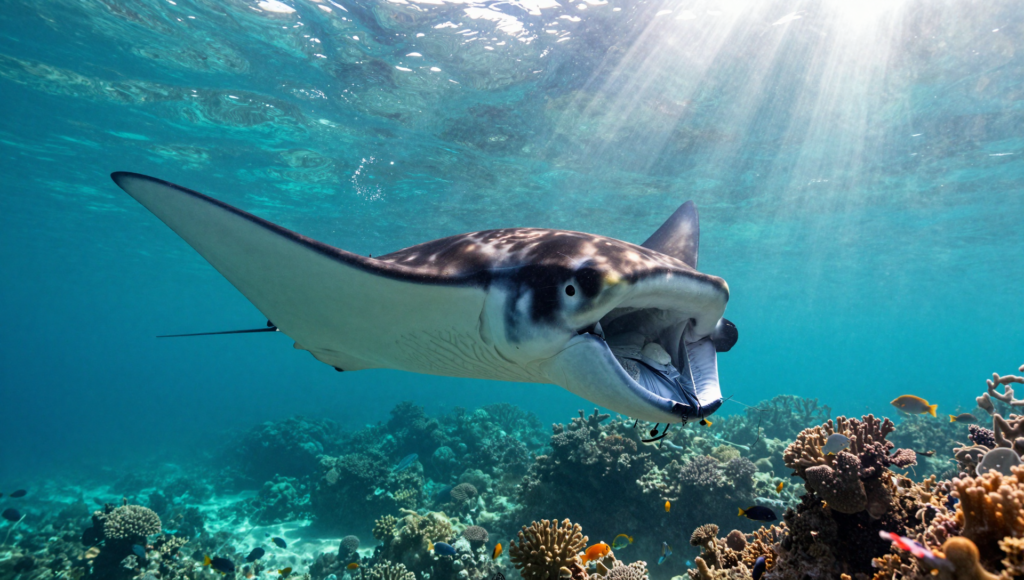
Manta rays are among the most graceful and fascinating creatures in the ocean. These enormous marine animals belong to the ray family and are closely related to sharks.
Pectoral fins provide several important benefits. They help aquatic animals steer, turn, balance, slow down, and control their depth in the water. Some species use them to hover or maintain a stable position while searching for food. In rays and manta rays, large pectoral fins provide powerful propulsion, allowing them to glide gracefully through the ocean. Overall, pectoral fins are essential adaptations that help aquatic animals move efficiently and survive in their underwater environments.


