




Manta rays are among the most graceful and fascinating creatures in the ocean. These enormous marine animals belong to the ray family and are closely related to sharks. Despite their impressive size and appearance, manta rays are generally peaceful and harmless to humans. They are known for their enormous wing-like pectoral fins, long tails, wide mouths, and elegant movements through the water. Their unique body structure allows them to glide through the ocean with remarkable efficiency, making them one of the most beautiful animals to observe in the wild.
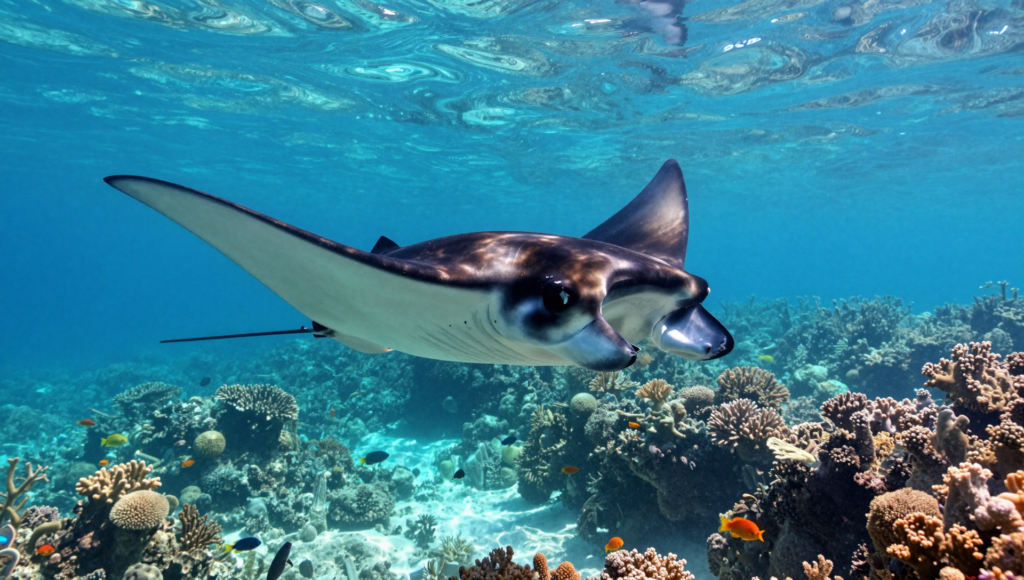
Habits of manta ray. They appear to fly through the water like underwater birds
The most distinctive feature of a manta ray is its large pectoral fins. These fins extend from both sides of the animal’s body and resemble wings. Manta rays move them in a smooth, rhythmic motion to generate propulsion and travel through the water. They can also use their fins to change direction, control their depth, and perform impressive underwater movements. When feeding, manta rays may roll, turn, or make graceful loops as they gather food from the water. Their large fins are therefore essential for movement, balance, and survival.
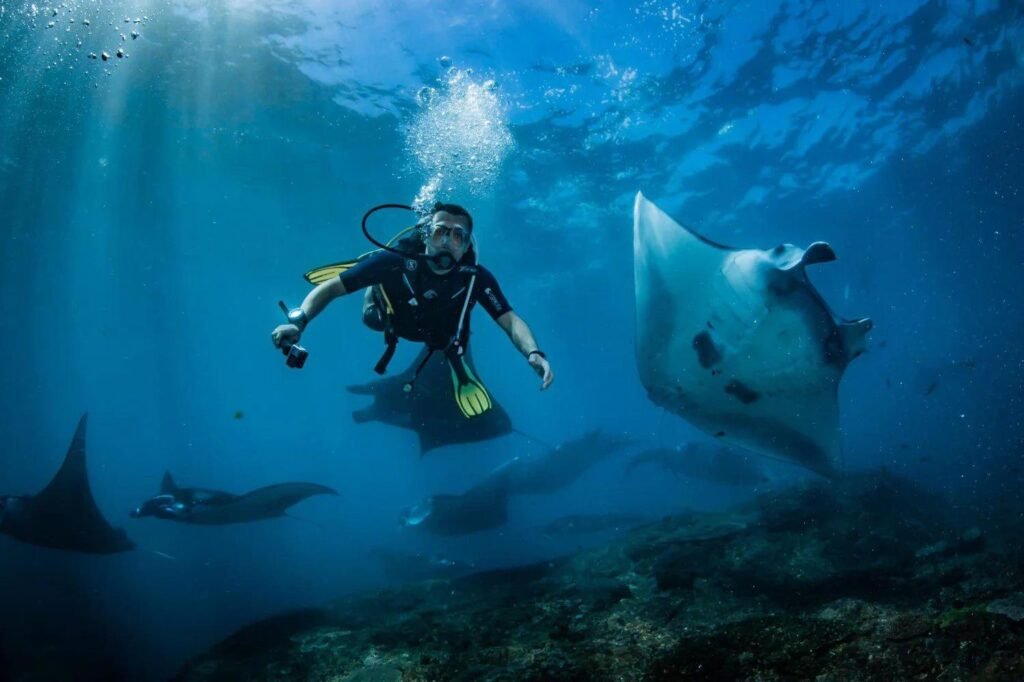
Manta Ray is called as gentle giant of sea. They can go one place to another place like a bird.
Manta rays also have long, slender tails extending behind their bodies. Unlike some other rays, manta rays do not have a venomous stinger on their tails. The tail helps complete the animal’s streamlined shape and may assist with stability and movement, although the large pectoral fins provide most of the propulsion. The absence of a stinging spine is one reason manta rays are generally considered gentle giants of the sea.
Another remarkable feature is their enormous mouths. Manta rays are filter feeders, meaning they do not hunt large animals. Instead, they swim through the water with their mouths open and filter tiny organisms, especially plankton, from the ocean. Special structures inside their mouths help separate food from seawater. This feeding strategy allows manta rays to consume large quantities of microscopic organisms while swimming through nutrient-rich waters.
Manta rays live in tropical, subtropical, and sometimes temperate oceans around the world. Different species have different ranges and habits. Some manta rays spend much of their time in coastal waters, while others travel across large areas of the open ocean. They are often found near coral reefs, islands, cleaning stations, and areas where ocean currents bring plankton to the surface. These locations provide important feeding and resting opportunities.
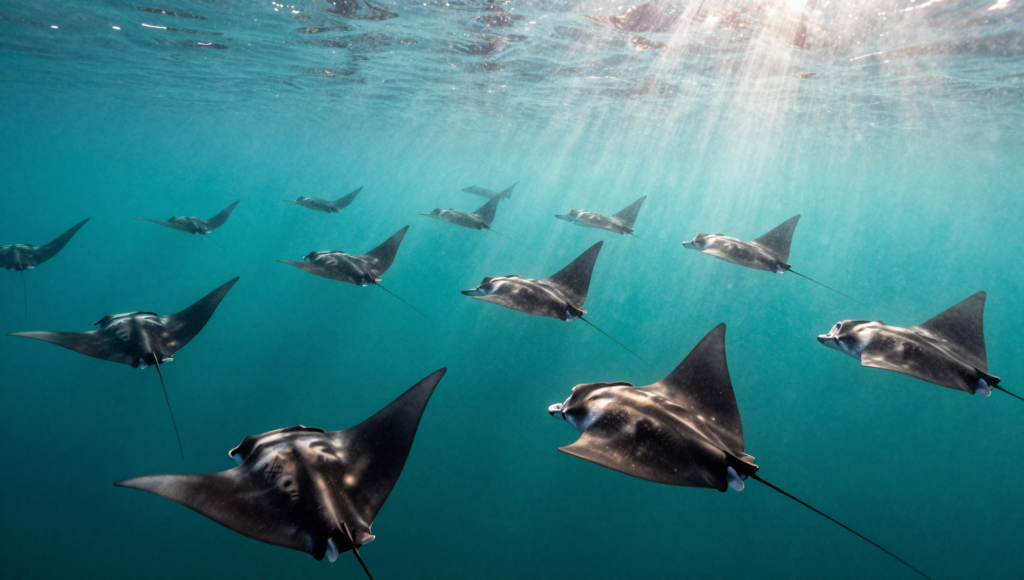
Their habitat is closely connected to their feeding behavior. When plankton becomes abundant in an area, manta rays may gather in groups to feed. They can sometimes be seen swimming together in large numbers, creating spectacular scenes beneath the surface. Manta rays may also visit cleaning stations, where smaller fish remove parasites and dead tissue from their bodies. These locations play an important role in maintaining their health.
Manta rays are also known for their impressive migrations. Some individuals travel long distances between feeding grounds and other important habitats. Their movements may be influenced by seasonal changes in water temperature, ocean currents, and the availability of food. Scientists study manta rays using identification photographs, satellite tags, and other research methods to understand their migration patterns and protect important habitats.
Although manta rays are powerful swimmers, they face threats from human activities. Fishing, accidental capture in fishing gear, habitat degradation, pollution, and climate change can affect their populations. Because manta rays grow slowly and produce relatively few young, their populations may take a long time to recover from major losses.
Protecting manta rays requires the conservation of healthy oceans and important marine habitats. Reducing harmful fishing practices, protecting feeding and cleaning areas, and controlling pollution can help these remarkable animals survive. Manta rays remind us that the ocean is home to creatures with extraordinary adaptations and peaceful ways of life. Their enormous fins, graceful movements, and gentle nature make them true symbols of the beauty and mystery of the marine world. When we protect manta rays, we also protect the complex ocean ecosystems on which countless other species—and humans themselves—depend.


