



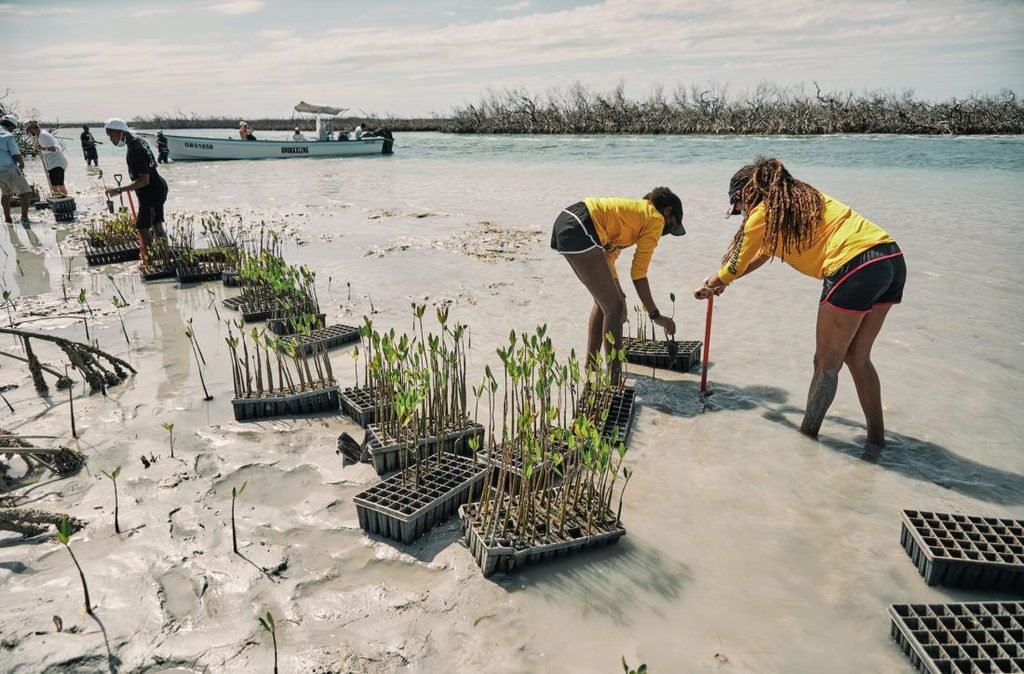
Mangrove Seed Potting
A practical guide to preparing containers, planting mangrove seeds or propagules, managing moisture, and raising healthy young plants for conservation and restoration.
Mangrove forests protect coastlines, provide habitat for wildlife, support fisheries, and help stabilize coastal sediments. Growing young mangrove plants in a nursery can provide stronger planting material for restoration projects, particularly where natural regeneration is limited.
Different mangrove species produce different types of seeds, fruits, or propagules. Therefore, the potting method should be adapted to the species rather than treating all mangrove planting material in exactly the same way.
What Is Mangrove Seed Potting?
Mangrove seed potting is the process of placing suitable mangrove seeds or propagules into containers filled with an appropriate growing medium and maintaining them until they develop into healthy seedlings.
Species such as Rhizophora produce elongated propagules that can often be inserted directly into a potting medium. Other mangrove species produce smaller seeds and may require a different nursery procedure.
Always identify the mangrove species before selecting the potting method. A technique suitable for a large Rhizophora propagule may not be suitable for a small Avicennia seed.
Selecting Healthy Mangrove Planting Material
Successful nursery production begins with good-quality planting material. Choose mature, healthy seeds or propagules whenever possible.
- Select material that is normally shaped and free from obvious damage.
- Avoid material showing signs of insect attack, severe decay, or fungal damage.
- Collect propagules responsibly without damaging mother trees or natural regeneration.
- Use locally appropriate species for the restoration environment.
- Pot the material as soon as practical after collection when the species requires fresh propagules.
Preparing the Nursery Container
Mangrove seedlings can be raised in suitable nursery bags, plastic pots, or other containers that provide enough room for root development. Containers should have drainage openings so that excess water does not remain stagnant around the roots.
Preparing the Potting Medium
The growing medium should provide physical support while allowing appropriate moisture, aeration, and root development. Depending on the species and nursery system, different substrates may be used.
Research on nursery production of Rhizophora mangle has shown that substrate composition can influence seedling growth and root development. Recent nursery research has investigated alternatives to collecting large quantities of natural mangrove soil, including controlled substrate mixtures.
Collecting large quantities of mud or soil directly from an intact mangrove ecosystem can disturb the habitat. Where appropriate, use a tested nursery substrate that supports healthy growth without damaging the natural mangrove environment.
Step-by-Step Mangrove Seed Potting
-
Prepare the container.
Fill a suitable nursery bag or pot with the selected growing medium. Leave enough space at the top to make watering easier. -
Moisten the medium.
Water the potting medium before inserting the planting material. It should be moist but not unnecessarily saturated. -
Position the seed or propagule.
Place the planting material according to the requirements of its species. Large Rhizophora-type propagules are commonly positioned upright. -
Insert the propagule carefully.
For elongated propagules, insert the lower portion into the growing medium while keeping the correct orientation. Nursery manuals commonly recommend several centimetres of insertion, with the exact depth depending on species and propagule size. -
Firm the medium gently.
Press the surrounding medium lightly so that the propagule remains stable. Avoid compacting the medium excessively because roots require access to air. -
Water carefully.
Provide suitable moisture according to the nursery environment and species. Avoid allowing prolonged stagnant conditions when the species or substrate does not tolerate them. -
Place the pots in a suitable nursery area.
Protect newly potted material from unnecessary physical disturbance, extreme heat, drying winds, animals, and other local hazards. -
Monitor development.
Check the pots regularly for emergence, leaf development, root stability, pests, disease, drying, and excessive water accumulation.
Potting Depth Depends on Species
One of the most important points in mangrove seed potting is that there is no single universal planting depth for every species.
| Planting Material | General Potting Approach | Important Consideration |
|---|---|---|
| Rhizophora propagules | Usually positioned upright with the lower portion inserted into the medium. | Keep the propagule stable and avoid planting excessively deep. |
| Ceriops propagules | Can be planted upright in suitable nursery containers. | Depth should reflect propagule size and species requirements. |
| Bruguiera propagules | Plant carefully in a moist, supportive growing medium. | Maintain correct orientation and avoid excessive burial. |
| Avicennia seeds | Usually handled differently from large viviparous propagules. | Follow a species-specific nursery method. |
| Xylocarpus seeds | Use a nursery method appropriate for the seed type. | Monitor moisture and germination carefully. |
Water Management
Water management is essential during mangrove nursery production. Newly potted material should not be allowed to dry out, but watering practices should also account for the species, substrate, container drainage, rainfall, temperature, and salinity conditions.
- Check the growing medium regularly.
- Provide sufficient moisture during dry weather.
- Prevent unwanted long-term stagnant water in containers.
- Use water quality appropriate for the nursery system.
- Adjust watering according to rainfall and evaporation.
Light and Nursery Protection
Young mangrove plants require suitable environmental conditions during establishment. Depending on species and local conditions, partial shade may help protect very young plants from excessive heat and drying.
The nursery should also be protected from trampling, animals, strong winds, and other disturbances. Good spacing between pots allows easier inspection and reduces unnecessary competition between seedlings.
Common Mangrove Potting Problems
Simple Mangrove Seed Potting Checklist
- Identify the mangrove species.
- Collect healthy and mature planting material responsibly.
- Prepare clean nursery containers.
- Ensure adequate drainage.
- Use a suitable growing medium.
- Moisten the medium before planting.
- Position seeds or propagules correctly.
- Use species-appropriate planting depth.
- Keep newly potted plants adequately moist.
- Inspect seedlings regularly.
- Protect the nursery from physical damage.
- Harden healthy seedlings gradually before field planting.
From Nursery Pot to Mangrove Restoration
Nursery-grown mangrove seedlings are ultimately intended for suitable restoration sites. However, producing seedlings is only one part of successful mangrove restoration. Restoration should consider natural tidal patterns, sediment conditions, salinity, elevation, hydrology, existing vegetation, and the suitability of the selected species.
In some situations, direct planting of suitable mangrove propagules may be possible and can reduce nursery requirements. Research on Rhizophora species has also demonstrated that propagule orientation can influence establishment. Therefore, nursery production should be selected because it addresses a genuine restoration need rather than being used automatically for every site.
Mangroves and Environmental Protection
Mangroves are closely connected with coastal biodiversity, fisheries, sediment stability, and protection from coastal processes. Learning how to raise healthy mangrove planting material can therefore support broader environmental education and conservation activities.
You can explore more science and environmental topics through the Science and Environment resources at TheScienceOnline.com.
Conclusion
Mangrove seed potting is a practical nursery technique for producing young plants that can later be used in appropriate restoration projects. The basic process involves selecting healthy planting material, preparing suitable containers and growing media, positioning the seed or propagule correctly, maintaining appropriate moisture, and monitoring the seedlings as they develop.
The most important principle is to match the potting technique to the mangrove species. Large propagules such as those produced by some Rhizophora species can be handled differently from small mangrove seeds. Careful nursery management can improve the availability of healthy planting material while reducing unnecessary pressure on natural mangrove habitats.


