


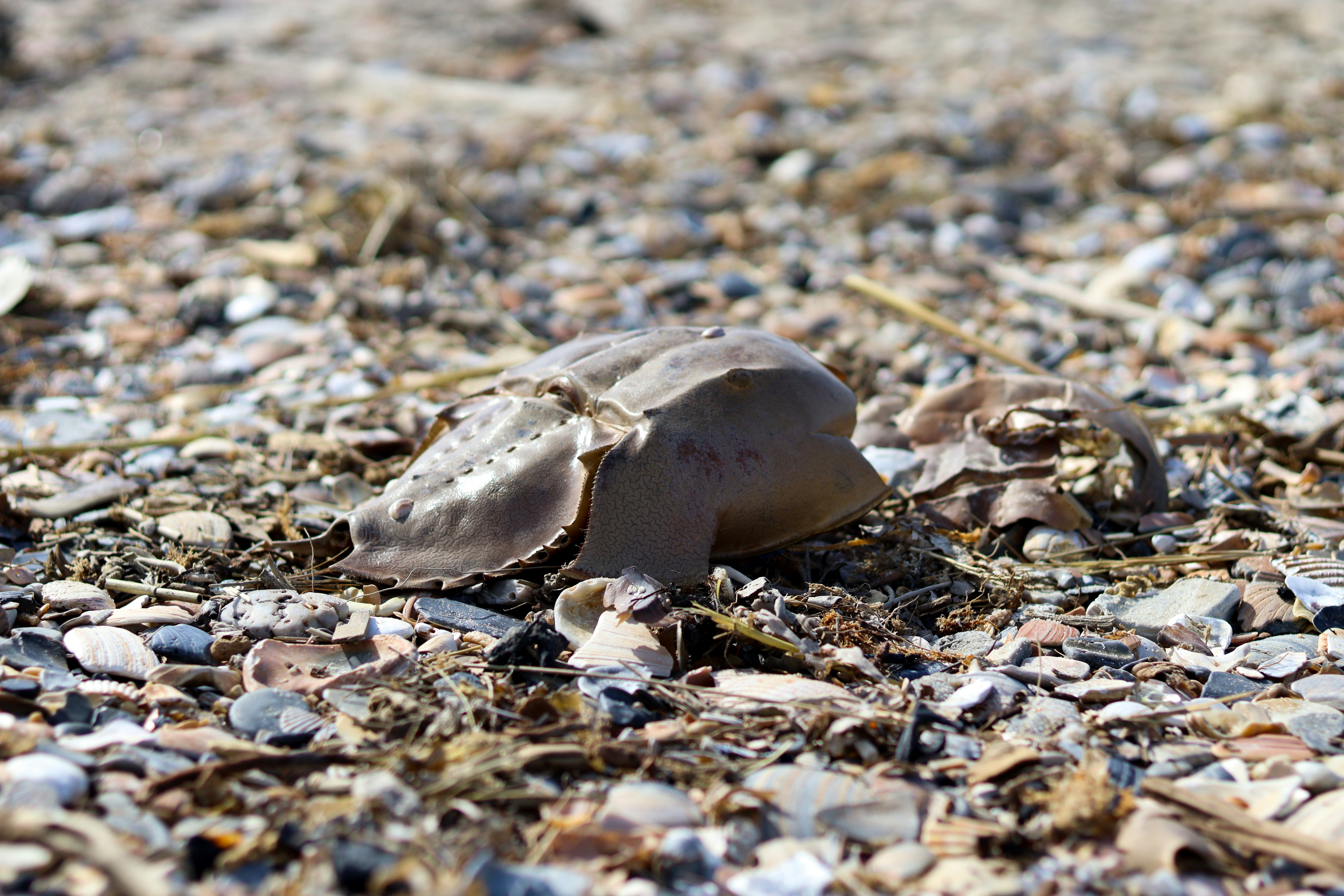
Introduction to Horseshoe Crabs
The horseshoe crab, a marine arthropod belonging to the class Merostomata, represents a remarkable lineage that has endured for approximately 450 million years. This incredible timeline makes them one of the Earth’s oldest living species, often referred to as “living fossils.” Their unique biological characteristics and evolutionary history offer profound insights into marine biology and ecology.
Horseshoe crabs possess a distinctive carapace that provides protection and a unique appearance reminiscent of medieval armor. The anatomy of these creatures is fascinating; they have a rigid exoskeleton, a long, spiked tail spine known as a telson, and a complex arrangement of limbs that serve various functions, including locomotion and feeding. Their blue blood, which contains a copper-based molecule called hemocyanin, plays a crucial role in their immune system and has made them invaluable to human biomedical applications.
Ecologically, horseshoe crabs play a significant role in coastal ecosystems. They contribute to the marine food web both as prey and as a source of nutrients for various species. The spawning events of horseshoe crabs create a surge of eggs that serve as an essential food source for migratory birds and other wildlife, particularly along the Atlantic coast of North America. Their adaptability to environmental changes over millions of years is a testament to their resilience and evolutionary success.
As living fossils, horseshoe crabs provide a window into ancient marine ecosystems and evolutionary processes. Their study continues to inform scientists about biodiversity and conservation efforts. Understanding the role of horseshoe crabs in both ecological and evolutionary contexts is crucial not only for appreciating their past but also for preserving their future amidst ongoing environmental challenges.
A History Spanning Eras
Horseshoe crabs have a remarkable evolutionary history, dating back approximately 450 million years, which makes them one of the oldest living species on Earth. Their resilience is highlighted by their ability to survive multiple mass extinctions, including the most famous one at the end of the Cretaceous period about 66 million years ago. Unlike many species that succumbed during these catastrophic events, horseshoe crabs continued to thrive. This survival can be attributed to their unique physiological and biological characteristics that allow them to adapt to changing environmental conditions.
The anatomy of horseshoe crabs has remained relatively unchanged, showcasing an evolutionary success that few organisms can boast. Their hard exoskeleton provides both physical protection against predators and a versatile mechanism for surviving various aquatic environments. Becoming a cornerstone species, horseshoe crabs occupy both coastal and deep-sea habitats, demonstrating versatility in their adaptability.
Over the eons, horseshoe crabs have faced significant ecological shifts, including changes in sea levels, climatic events, and the diversification of marine life. Despite these challenges, they have managed to modify their behaviors and reproductive strategies in response to environmental pressures. For instance, their breeding cycles are synchronized with lunar phases, optimizing the likelihood of their eggs surviving predation and environmental hazards.
This impressive adaptability has not only allowed horseshoe crabs to persist through geological epochs but has also positioned them as a critical component of modern ecosystems. Their ecological importance extends to human medicine, with the unique properties of their blue blood, which contains a crucial component used in the biomedical field for testing bacterial contamination. This rich history demonstrates the enduring legacy of horseshoe crabs as essential players in both ancient and contemporary environments.
Meet the Atlantic Horseshoe Crab
The Atlantic horseshoe crab (Limulus polyphemus) is a fascinating marine creature that inhabits the coastal waters of the eastern United States, extending from Maine down to the Gulf of Mexico. Characterized by its distinctive hard shell and long tails, this species is not a true crab, but belongs to an ancient group of marine arthropods known as chelicerates, which have existed for approximately 450 million years.
Geographically, the Atlantic horseshoe crab is primarily found in shallow coastal waters and estuarine habitats, where sand and mud provide a suitable substrate for burrowing and spawning. These crabs thrive in environments with a mix of salt and fresh water, demonstrating a preference for areas that support abundant populations of prey, such as mollusks and various benthic organisms. Their range expands across various habitats, from sandy beaches to marshlands, showcasing their adaptability in different environments.
A notable feature of the Atlantic horseshoe crab is its blue blood, which contains a unique substance called hemocyanin that aids in oxygen transport. This blue blood plays a critical role in biomedical applications, particularly in the testing of medical equipment and vaccines for contamination, highlighting the ecological significance of this species beyond its natural habitat. Furthermore, the horseshoe crab is equipped with five pairs of legs, which help in locomotion and foraging, and a pair of compound eyes that enhance its ability to detect predators and navigate through its environment.
The Atlantic horseshoe crab, with its unique adaptations and extensive geographic distribution, continues to survive through changing climates and human impacts, emphasizing its resilient legacy in marine ecosystems.
Evolutionary Significance
The horseshoe crab, often considered a living fossil, has a remarkable evolutionary history that spans 450 million years. This longevity not only highlights their adaptability but also provides invaluable insight into the process of evolution itself. As a member of the class Merostomata, horseshoe crabs are more closely related to arachnids, such as spiders and scorpions, than to true crabs. This affiliation underscores their ancient lineage, showing how certain traits have persisted over eons despite the shifting landscapes of such long timescales.
The primitive body structure of horseshoe crabs, characterized by hard exoskeletons and segmented bodies, showcases a successful design that has enabled them to thrive in various environments. Their simple yet effective anatomy consists of a carapace that protects vital organs, a long tail spine that assists with stability, and multiple pairs of jointed legs that facilitate navigation across the seafloor. This unchanging body plan emphasizes a successful adaptation to ecological niches, allowing them to withstand significant environmental changes throughout their existence.
Moreover, studying the evolutionary significance of horseshoe crabs sheds light on the broader mechanisms of survival. Their resistance to extinction despite numerous global changes serves as a case study in effective adaptation strategies, including reproductive resilience and immune response. Horseshoe crabs possess unique blood containing a substance known as Limulus Amebocyte Lysate (LAL), which has significant biomedical applications, particularly in testing for bacterial contamination in medical devices. This aspect not only reinforces their biological importance but also strengthens the argument for preserving their habitat, as their continued survival can provide insights into evolutionary processes, ecological health, and potential medical breakthroughs.
Comparison with Dinosaurs
Horseshoe crabs are remarkable creatures that have inhabited the Earth for an astonishing 450 million years. This extensive timeline places them in a unique historical context, particularly when compared to other ancient species such as dinosaurs. In fact, horseshoe crabs existed for over 200 million years before dinosaurs first appeared on the planet, making them one of the oldest living species known to science.
The earliest horseshoe crab fossils date back to the Ordovician period, whereas the first dinosaurs emerged during the Triassic period, approximately 230 million years ago. This significant gap in their respective lineages raises intriguing questions about survival and adaptability. While dinosaurs dominated the Mesozoic era, horseshoe crabs thrived in a wide range of environments, showcasing their remarkable resilience as a species.
The evolutionary journey of horseshoe crabs has been marked by minimal changes in their anatomical structure, which indicates their effectiveness in adapting to shifting ecological conditions. Over millions of years, they have evolved to withstand environmental pressures that led to the extinction of many other species, including dinosaurs by the end of the Cretaceous period. This resilience is attributed in part to their hardy physiology, which includes a tough exoskeleton and a unique circulatory system that has allowed them to survive drastic changes in sea levels, temperatures, and chemical compositions of oceans.
Thus, the endurance of horseshoe crabs through various geological epochs serves as a testament to their adaptability and evolutionary success. Their long tenure on Earth not only emphasizes their role in marine ecosystems but also offers valuable insights into the nature of survival across eons. As a living link to a distant past, horseshoe crabs remind us of the complexities of evolution and the delicate balance of life on our planet.
Ecological Role and Importance
Horseshoe crabs, often considered living fossils, play a significant ecological role in marine ecosystems. As benthic organisms, they inhabit coastal waters along the Atlantic coast of North America and engage in essential interactions with various marine species. These unique arthropods serve as a vital food source for a diverse array of predators, including migratory birds, fish, and even crustaceans. Particularly during their spawning season, horsehoe crabs attract a multitude of shorebirds that rely on their eggs for nutrition. The abundant eggs provide a crucial energy source during the migratory period, allowing these birds to replenish their reserves while flying long distances.
The significance of horseshoe crabs transcends their role as prey; they also contribute to the overall health of the coastal ecosystem. Their feeding habits, which involve sifting through sediment, aid in breaking down organic matter, thus promoting nutrient cycling within their environments. By participating in these ecological processes, horseshoe crabs help maintain the balance and sustainability of their habitats.
Additionally, horseshoe crabs have garnered attention in human medical science due to their unique blue blood. This blood contains a substance known as Limulus Amebocyte Lysate (LAL), which is critical in testing for bacterial contamination in medical equipment and vaccines. The presence of endotoxins, which can be harmful to humans, can be detected using LAL, thereby ensuring the safety of numerous biomedical products. Consequently, horseshoe crabs play an indispensable role not only in their ecosystems but also in protecting public health through their contributions to medical testing. Their continued survival is vital not only for maintaining ecological integrity but also for supporting advancements in human health.
Threats to Horseshoe Crab Populations
Horseshoe crabs, despite their impressive longevity and resilience, are currently facing several significant threats that jeopardize their survival. Chief among these threats is habitat loss, which arises from coastal development, pollution, and destructive fishing practices. As human populations grow and expand, natural habitats such as beaches and estuaries, vital for horseshoe crabs to spawn, are increasingly compromised. The alteration of coastal environments limits their reproductive success, contributing to declining populations.
Overfishing further exacerbates the decline in horseshoe crab numbers. These creatures are harvested not only for bait in the fishing industry but also for their blood, which is critical in the biomedical industry. The extraction of horseshoe crabs for these purposes can be unsustainable, especially if proper regulations are not enforced. The high demand for horseshoe crabs and their blood puts immense pressure on their populations, leading to concerns regarding their viability and reproductive health.
Moreover, environmental changes exacerbated by climate change pose a profound risk to horseshoe crabs. Rising sea levels and increased water temperatures alter their natural habitats, making it harder for them to thrive. Furthermore, climate change influences the timing of breeding cycles and the availability of food resources, which can lead to mismatches in the ecological balance needed for their continued survival. The resulting implications of these threats are grave; not only are horseshoe crab populations declining, but their role in the ecosystem—as a food source for migratory birds and a vital player in several marine environments—is also threatened, potentially leading to broader ecological ramifications.
Conservation Efforts
The conservation of horseshoe crabs has gained significant attention over the last few decades due to their ecological importance and vulnerability to overexploitation. Various legal protections have been established to mitigate the declining populations. In the United States, for instance, the Atlantic States Marine Fisheries Commission (ASMFC) has implemented regulations concerning the harvesting of horseshoe crabs along the Atlantic coast. These regulations set quotas to limit the number of crabs collected for biomedical uses and bait in fisheries.
In addition to legal protections, habitat restoration initiatives play a crucial role in conservation efforts. Horseshoe crabs rely on healthy coastal habitats for spawning, and therefore, the preservation and restoration of these environments are essential. Organizations such as the Nature Conservancy and the Atlantic Coastal Cooperative Fisheries Management Program are actively involved in habitat restoration projects. These initiatives often include the restoration of beaches and estuaries, ensuring that horseshoe crabs have appropriate spawning sites. These collaborative efforts also help to raise awareness about the importance of maintaining a balanced ecosystem.
Moreover, various non-profit organizations and wildlife agencies have dedicated resources to conserving horseshoe crab populations. The Horseshoe Crab Restoration Coalition, for example, is focused on raising public awareness and mobilizing community action to support sustainable practices. This coalition works on data collection, monitoring populations, and partnering with local communities to engage them in conservation efforts. Their comprehensive approach includes educational programs aimed at teaching the importance of horseshoe crabs not only in local ecosystems but also in the larger context of ocean health.
Through these combined efforts, the species has a better chance of thriving into the future, highlighting the necessity of continued conservation initiatives that address both legal regulations and habitat protection.
Conclusion: Learning from Living Fossils
Horseshoe crabs, often referred to as living fossils, offer a remarkable glimpse into our planet’s evolutionary history. Having successfully navigated Earth’s changing environments for approximately 450 million years, their survival is a testament to their resilience and adaptability. Throughout this blog, we have explored various aspects of horseshoe crabs, including their key role in medical research, ecological importance, and the pressing need for their conservation. These ancient creatures help to illuminate what it means to endure against the odds.
As we reflect on the lessons learned from horseshoe crabs, we recognize that their existence highlights the delicate balance of marine ecosystems and the interconnectedness of species. They serve as a reminder that even the most resilient organisms are vulnerable to human actions, such as habitat destruction and over-exploitation. The current decline of horseshoe crab populations raises serious concerns about the future of biodiversity, emphasizing the importance of responsible environmental stewardship.
The protection of horseshoe crabs transcends their immediate biological significance; it also holds implications for broader ecological health. By safeguarding these ancient creatures, we are indirectly conserving the intricate web of life that relies on them. Efforts to enhance public awareness and engage in sustainable practices can contribute to the long-term survival of horseshoe crabs and numerous species that depend on them.
In conclusion, the enduring legacy of horseshoe crabs teaches us valuable lessons about resilience, adaptation, and the necessity of conservation. Promoting awareness and taking actionable steps to protect these extraordinary creatures will ensure that future generations can also learn from and appreciate these remarkable survivors of time.


