




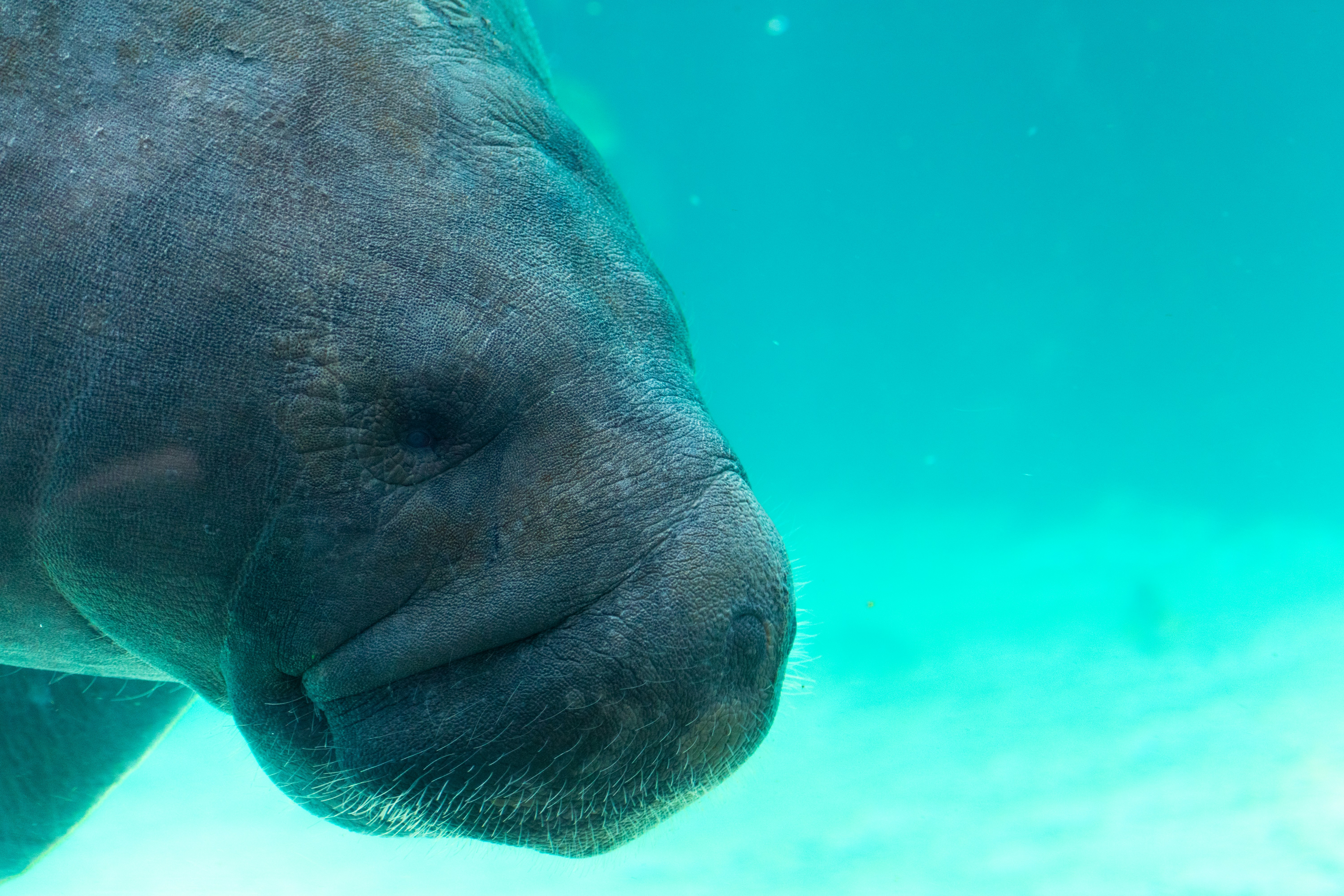
Introduction to Manatees and Elephants
Manatees and elephants are two remarkable mammals that capture the interest of wildlife enthusiasts and researchers alike. These creatures inhabit vastly different environments and exhibit distinct behaviors, yet they share a common lineage as part of the class Mammalia. Their evolutionary paths, habitat adaptations, and social structures make them compelling subjects for comparative studies.
Manatees, often referred to as “sea cows,” reside in warm coastal waters, rivers, and freshwater lakes. These herbivorous marine mammals belong to the order Sirenia and are characterized by their large, rounded bodies and paddle-like flippers that adapt them to aquatic life. Manatees are primarily found in regions such as the Caribbean Sea, the Amazon River, and the coastal waters of Florida. Their gentle demeanor and unique ecological role as grazers of seagrass meadows contribute significantly to the health of their aquatic environments.
On the other hand, elephants are terrestrial giants associated with the family Elephantidae, and they are typically found in diverse habitats, ranging from savannas and forests to grasslands across Africa and Asia. Elephants are known for their strong social bonds, complex communication skills, and immense intelligence, which are evident in their structured herds and collaborative behaviors. They play a crucial role in their ecosystems as keystone species, influencing vegetation patterns and supporting biodiversity.
Both manatees and elephants have become subjects of intense conservation efforts due to the threats they face from habitat loss, poaching, and climate change. Understanding their biology and behavior is essential for devising effective conservation strategies. Furthermore, studying these two distinct animals can provide insights into evolutionary processes, adaptive strategies, and the interconnectedness of life on Earth. As such, the fascinating relationship between manatees and elephants extends beyond their physical characteristics to encompass their roles within the ecosystem and global biodiversity.
The Evolutionary Link: A Common Ancestor
The evolutionary connection between manatees and elephants is both remarkable and complex, revealing significant insights into the history of these two animal groups. Research indicates that manatees, often referred to as sea cows, and elephants share a common ancestor that existed approximately 60 million years ago. This ancestor belonged to a group known as the Paenungulata, which also includes hyraxes. Understanding this relationship sheds light on the intricate tapestry of evolutionary biology.
The divergence between the lineages leading to modern manatees and elephants is believed to have occurred during the late Paleocene or early Eocene Epoch. At this point, the ancestors of manatees began adapting to aquatic environments, leading to their evolution into marine mammals. Conversely, their terrestrial relatives, the ancestors of elephants, evolved to thrive in varied land habitats. This divergence exemplifies how environmental pressures can shape the evolutionary trajectory of species, leading to significant physiological and behavioral adaptations.
Scientists have gathered evidence through comparative anatomy, genetics, and fossil records that support this evolutionary link. For example, both manatees and elephants exhibit similar features, such as large body sizes and a specialized diet focused on plant materials. Moreover, molecular studies confirm that manatees are more closely related to elephants than to any other group of mammals. Such findings underscore the interconnectedness of life on Earth, demonstrating how diverse species can trace their lineage back to common ancestors, despite radically different adaptations to their respective environments.
The study of these evolutionary connections not only enhances our understanding of the natural world but also highlights the importance of conserving these unique species. The shared history between manatees and elephants serves as a poignant reminder of the evolutionary processes that have shaped biodiversity over millions of years.
Manatees: Fully Aquatic Adaptations
Manatees, often referred to as sea cows, are striking examples of fully aquatic mammals that have developed a range of unique adaptations to thrive in their watery habitats. These gentle giants are primarily herbivorous and are known to inhabit shallow coastal waters, rivers, and estuaries, primarily in warm climates. Their physical characteristics closely reflect their reliance on aquatic life.
One of the most notable adaptations is their streamlined, torpedo-shaped body, which epitomizes efficiency in buoyancy and movement through water. Their large, paddle-like flippers enable them to maneuver gracefully despite their significant size, allowing for both slow, deliberate motions and bursts of speed when necessary. Manatees also possess a thick layer of fat beneath their skin that acts as insulation, which is crucial for maintaining body temperature in cooler waters.
Another essential adaptation of manatees is their respiratory system, which is specially designed for their aquatic lifestyle. Manatees are obligate air-breathers; they can hold their breath for up to 20 minutes while submerged, surfacing to breathe through their nostrils located on the top of their heads. This anatomical feature allows them to remain discreetly submerged while grazing on aquatic plants, thereby reducing detection from potential predators.
Furthermore, manatees exhibit a unique behavior of grazing on seagrass beds, which are vital not only for their diet but also for the overall health of marine ecosystems. Their feeding habits help maintain the balance of aquatic vegetation, showcasing how their adaptations contribute positively to their environment. In essence, the evolution of manatees has equipped them to perfectly fit into their aquatic surroundings, making them one of nature’s remarkable examples of adaptation in the animal kingdom.
Elephants: Land-Dwelling Giants
Elephants are the largest land-dwelling mammals on Earth, renowned not only for their size but also for their intricate social structures and advanced cognitive abilities. Comprising three species—the African bush elephant, the African forest elephant, and the Asian elephant—these magnificent creatures exhibit a range of sizes and characteristics, adapted to their environments.
Socially, elephants are highly intelligent and exhibit complex behaviors. They form matriarchal herds, led by the oldest female, which act as the backbone of their communities. These herds typically consist of closely related females and their offspring, demonstrating a strong familial bond. Elephants are known for their remarkable communication skills, using low-frequency sounds, body language, and even seismic vibrations to convey messages over great distances.
Their intelligence is evidenced not only in their social interactions but also in their problem-solving abilities. Numerous studies highlight their capacity for empathy, self-awareness, and even grief, particularly when bereaved of a family member. Such traits showcase the depth of their emotional lives, setting them apart from many other animal species.
However, elephants face a myriad of environmental challenges that threaten their survival. Habitat destruction, primarily due to human activities, has significantly reduced their natural range. Furthermore, poaching, driven largely by the illegal ivory trade, poses a direct threat to their populations. Conservation efforts are underway globally to protect these majestic animals, but the struggle to coexist with expanding human populations continues to create tensions.
In contrast to the aquatic lifestyle of manatees, elephants navigate vast landscapes, showcasing the diversity of mammalian life on Earth. They embody a unique connection to their habitats, living in complex social groups that emphasize the importance of community and intelligence among terrestrial mammals.
Skeletal Structures: Traces of Shared Heritage
The skeletal structures of manatees and elephants exhibit remarkable similarities, providing compelling evidence of their shared evolutionary heritage. Both species belong to the clade Afrotheria, which groups them together based on genetic and morphological traits. Some of the most striking connections can be observed in their limb structures. For instance, both manatees and elephants have adapted their forelimbs for different purposes: the manatee’s front flippers are modified for swimming, while the elephant’s trunk and legs are designed for terrestrial mobility.
In terms of skeletal features, both species possess a similar arrangement of bones in their forelimb structures, including the presence of an elongated radius and ulna. This congruity suggests that their ancestors shared a common land-dwelling form before adapting to aquatic environments. The modification of the bones reflects how evolution can shape a species in response to varying habitats. In manatees, the skeletal adaptations facilitate streamlined movement through water while maintaining stability, whereas elephants have developed robust limb bones capable of supporting their massive weight on land.
Modern anatomical studies, including advanced imaging techniques like CT scans and 3D modeling, have enhanced our understanding of these evolutionary transformations. These technologies allow researchers to analyze fossils and living species extensively. They uncover details regarding the morphology and functional adaptations that have occurred over millions of years. These insights not only reinforce the evidence of a shared ancestry but also deepen our comprehension of the evolutionary pathways that led to the distinct adaptations seen in manatees and elephants today.
The Impact of Environmental Challenges on Evolution
Manatees and elephants, despite being from vastly different habitats, are both facing unprecedented environmental challenges that have significant implications for their evolution. Habitat loss ranks as one of the most pressing issues for both species. For manatees, coastal development, boating activities, and pollution in waterways diminish their natural habitats, leading to decreased availability of aquatic vegetation, which is their primary food source. Similarly, elephants are experiencing habitat fragmentation due to human encroachment, resulting in reduced movement and access to essential resources like water and food.
Climate change further exacerbates these challenges, influencing the ecosystems in which both species reside. Rising temperatures and shifting weather patterns affect water levels and quality for manatees, while elephants are confronted with changing landscapes that alter migratory routes and breeding grounds. These environmental pressures can potentially lead to significant evolutionary changes as both species adapt to survive in their increasingly threatened environments.
Conservation efforts play a crucial role in mitigating these impacts. For manatees, initiatives aimed at protecting their habitats, such as designated safe zones and reduction of boating speeds in critical areas, can promote their survival. On the other hand, conservation programs for elephants often focus on anti-poaching measures and preserving large tracts of land to ensure safe migration. By addressing habitat degradation and climate impacts, these efforts not only safeguard current populations but may also facilitate adaptive traits that enhance future resilience to environmental challenges.
As these creatures navigate the complex interplay between their biology and their habitats, understanding the impact of these environmental challenges becomes vital. The influence of such pressures on evolution is significant, challenging both manatees and elephants to adapt in ways that ensure their survival for generations to come.
Conservation Status of Manatees and Elephants
The conservation status of manatees and elephants has become an area of increasing concern given the growing threats to their populations. Manatees, often referred to as sea cows, are primarily found in warm coastal waters and rivers. Currently, the IUCN Red List classifies the West Indian manatee as “vulnerable”, indicating that their numbers are decreasing due to habitat loss, watercraft collisions, and pollution. Efforts must be taken to protect their aquatic habitats, as the degradation of seagrass beds and waterways continues to put these gentle giants at risk.
Elephants, on the other hand, face a different array of threats. African elephants are classified as “Endangered”, while Asian elephants are categorized as “Critically Endangered” on the IUCN Red List. The primary factors contributing to their decline include poaching for ivory, habitat encroachment, and human-wildlife conflict. Conservation initiatives focusing on anti-poaching efforts, habitat preservation, and community-based approaches are crucial to ensure the survival of these magnificent creatures.
Both manatees and elephants play vital roles in maintaining their respective ecosystems. Manatees are herbivores that assist in the health of aquatic environments by controlling seagrass growth. Elephants contribute to the ecosystem by creating clearings in forests, which promotes growth of grasses and other vegetation. The preservation of their habitats is essential not only for their survival but for the overall health of biodiversity. Human intervention is key; through awareness and education, individuals and communities can actively participate in conservation efforts, helping to ensure that these iconic species continue to thrive in their natural environments.
Cultural Significance and Symbolism
Manatees and elephants hold a prominent status in various cultures around the world, often serving as symbols of strength, wisdom, and the interconnectedness of life. In many societies, elephants are revered for their intelligence and strong familial bonds. They are frequently depicted in folklore and religious narratives, symbolizing good fortune and spiritual strength. For instance, in Hindu culture, the elephant-headed deity Ganesh represents wisdom and the removal of obstacles, illustrating the animal’s deep-seated cultural significance.
Similarly, manatees have their own rich tapestry of symbolism. In several Indigenous cultures of the Americas, manatees are viewed as symbols of gentleness and tranquility, often associated with nurturing and protection. Their slow-moving nature and calm demeanor resonate with ideas of peace and harmony with the environment. Folklore sometimes depicts manatees as mermaids, leading to tales that emphasize their mysterious and serene presence in aquatic ecosystems.
The conservation efforts aimed at protecting both elephants and manatees highlight their cultural importance and the crucial roles they play in their respective ecosystems. For instance, organizations dedicated to elephant conservation often invoke the cultural symbolism of elephants to galvanize support and raise awareness about the threats they face, such as poaching and habitat loss. Similarly, initiatives focused on manatee conservation emphasize their role in maintaining aquatic biodiversity and ecosystems, underlining the need to respect and protect these gentle giants.
Understanding the cultural significance of manatees and elephants enhances our appreciation for biodiversity and the intricate relationships that bind various species to human societies. These animals not only symbolize important values and beliefs but also remind us of our responsibility to ensure their survival and the health of our planet’s ecosystems.
Conclusion: The Importance of Understanding Evolutionary Connections
Exploring the fascinating connections between manatees and elephants illuminates the remarkable intricacies of evolutionary biology. These two species, seemingly disparate in their habitats and lifestyles, share a common lineage that dates back millions of years. By delving into their evolutionary paths, we gain a deeper understanding of how different environmental factors shape the adaptations and behaviors of species. This comparison highlights the importance of studying the evolutionary relationships among species, which is crucial for enhancing our appreciation of wildlife diversity.
Furthermore, acknowledging the evolutionary connections between manatees and elephants plays a significant role in conservation efforts. Recognizing that both species belong to the same clade, known as the Afrotheria, encourages a holistic approach to habitat protection. Conservation strategies that consider the evolutionary ties between species can lead to more effective preservation of ecosystems, as the decline of one species can have ripple effects on its relatives within the phylogenetic tree.
The understanding of these connections also enriches our cultural representation of wildlife. By disseminating knowledge that ties these gentle giants together, we inspire a sense of shared kinship among different species, fostering a compassionate viewpoint toward their preservation. The promotion of awareness regarding the evolutionary history of manatees and elephants can encourage public interest and support for conservation initiatives.
In conclusion, understanding the evolutionary connections between manatees and elephants is not merely an academic pursuit but a vital aspect of fostering respect for biodiversity and enhancing conservation efforts. By appreciating the intricate web of life and its history, we enhance our ability to protect these remarkable creatures and the habitats they occupy for generations to come.


