




Woolly rhinoceroses (woolly rhinos) really existed. They were large, shaggy mammals adapted to the Ice Age, with thick fur, a prominent horn, and a body built for extremely cold environments. They lived across parts of Europe and northern Asia during the Pleistocene and survived until roughly 14,000–10,000 years ago, when climate change and human pressures contributed to their disappearance. Woolly rhinos were herbivores, so they mainly ate grasses, herbs, and other low-growing plants. They used their large horns to clear away snow and reach vegetation underneath, while their strong bodies and thick fur helped them survive the freezing Ice Age environment.
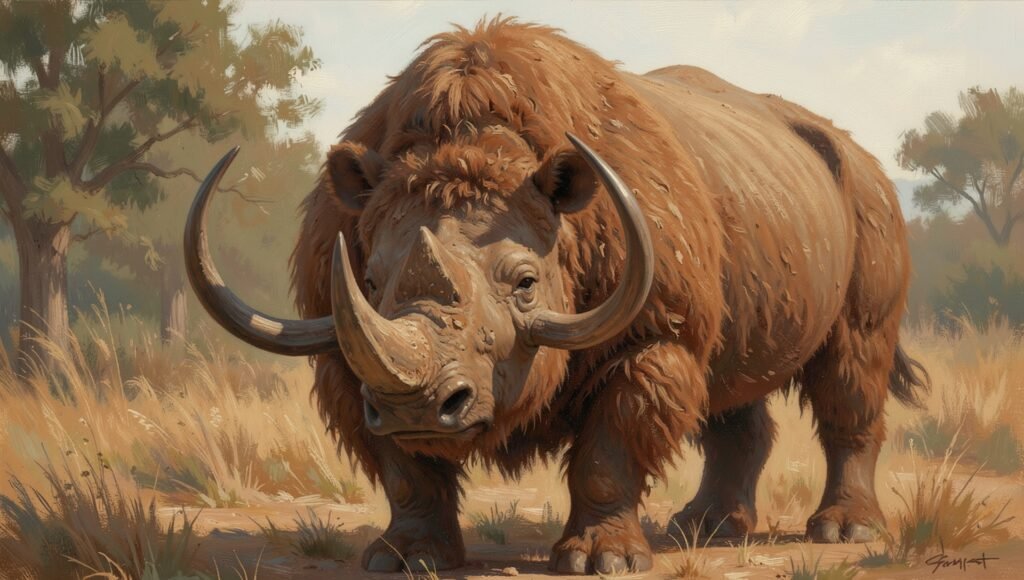
Woolly rhinos were generally solitary animals, although mothers stayed closely with their young. They likely spent much of their time grazing on grasses and other plants, using their horns to clear snow and defend themselves. Evidence from fossil remains and preserved tracks suggests they moved across open, cold grasslands and may have been territorial or defensive when threatened, while their thick fur helped them survive the harsh Ice Age climate.
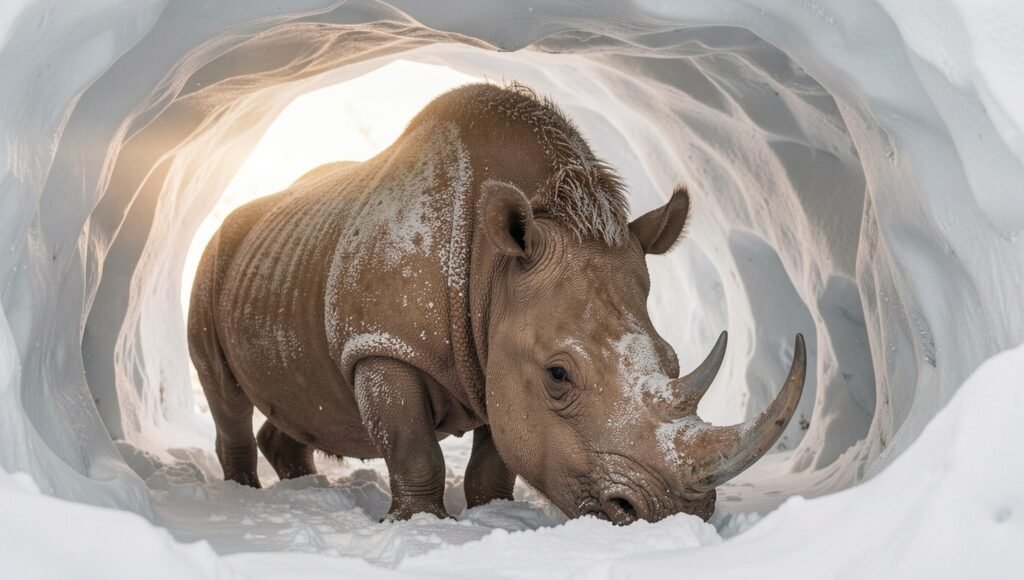
Reconstructing a woolly rhino’s genome involves extracting and analyzing ancient DNA preserved in fossils, bones, teeth, or frozen remains. Scientists compare these genetic fragments with DNA from living rhinoceros species to piece together much of the extinct animal’s genetic blueprint. This research can reveal how woolly rhinos adapted to the Ice Age, how populations changed over time, and why the species eventually became extinct.
Woolly Rhinoceros
The Shaggy Giant of the Ice Age
Did Woolly Rhinoceroses Really Exist?
Yes! Woolly rhinoceroses, often called woolly rhinos, really existed. These enormous shaggy mammals lived during the Ice Age and were specially adapted to survive in some of the coldest environments of the Pleistocene.
Their bodies were covered with thick fur, they had a prominent horn, and they possessed powerful bodies that helped them survive freezing temperatures and harsh landscapes.
Read the Full Woolly Rhino Article❄️ Ice Age Giants
Woolly rhinoceroses were large mammals that lived across parts of Europe and northern Asia during the Pleistocene. They were among the remarkable large animals that inhabited the cold landscapes of the Ice Age.
Their thick coats of fur provided insulation against extremely low temperatures. Their compact, powerful bodies also helped them conserve heat and move through challenging environments.
🦏 Their Powerful Horn
One of the most recognizable features of the woolly rhino was its large horn. The horn was not simply a display feature. It could also have been useful for finding food beneath snow.
🌿 What Did Woolly Rhinos Eat?
Woolly rhinoceroses were herbivores. Their diet mainly consisted of vegetation that grew close to the ground.
- Grasses
- Herbs
- Low-growing plants
- Other available Ice Age vegetation
During snowy periods, their horns could help them uncover vegetation hidden beneath the snow.
🌨️ How Did They Survive the Cold?
Woolly rhinos had several physical characteristics that helped them cope with the severe Ice Age climate.
🗺️ Where Did They Live?
Woolly rhinoceroses inhabited broad regions of Europe and northern Asia. They were adapted to cold, open landscapes associated with the Ice Age.
Their fossils provide important evidence about the animals that lived alongside humans and other Ice Age megafauna.
⏳ When Did Woolly Rhinos Disappear?
Woolly rhinoceroses survived until roughly 14,000–10,000 years ago. Their disappearance occurred during a period of major environmental change at the end of the Ice Age.
Scientists consider climate change and human pressures among the factors that contributed to their decline and eventual disappearance.
🔬 Why Are Woolly Rhinos Important?
Woolly rhinoceroses help scientists understand the Ice Age world. Their fossils reveal information about ancient ecosystems, climate, vegetation, and the animals that once lived across northern regions.
Studying these extinct giants also helps researchers explore how large mammals responded to changing environments and human activity.
🦏 Quick Facts
- Common name: Woolly rhinoceros or woolly rhino
- Era: Pleistocene / Ice Age
- Range: Parts of Europe and northern Asia
- Diet: Herbivorous
- Main foods: Grasses, herbs, and low-growing plants
- Adaptations: Thick fur, powerful body, and large horn
- Extinction: Roughly 14,000–10,000 years ago
- Major pressures: Environmental change and human pressures


