


Chapter 4
Biological Effects of Noise on the Human Body
Introduction
For many years, environmental noise was considered primarily a nuisance or a cause of hearing loss. However, advances in medical research have revealed that noise is much more than an auditory hazard. Chronic exposure to environmental noise triggers a complex series of biological responses that affect nearly every major organ system. Even when sound levels are below those that damage hearing, the body may interpret unwanted noise as a stressor, initiating physiological changes designed to prepare for danger.

This response is beneficial during genuine emergencies, but when activated repeatedly by traffic, aircraft, railway systems, or industrial activities, it becomes harmful. Persistent activation of stress pathways contributes to hypertension, endothelial dysfunction, oxidative stress, chronic inflammation, metabolic disturbances, and cardiovascular disease. This chapter explores the biological mechanisms through which environmental noise affects the human body, emphasizing the pathways linking chronic noise exposure to adverse cardiovascular outcomes.
4.1 The Human Stress Response to Noise
The human body is equipped with sophisticated systems that detect and respond to potential threats. Loud or unexpected sounds activate these systems almost instantaneously, even during sleep.
When environmental noise is perceived as disturbing or threatening, the brain interprets it as a stress signal. This activates two major physiological pathways:
- The Sympathetic-Adrenal-Medullary (SAM) System
- The Hypothalamic-Pituitary-Adrenal (HPA) Axis
These systems are essential for short-term survival but become harmful when repeatedly activated by chronic noise exposure.
4.2 Activation of the Sympathetic Nervous System
The sympathetic nervous system is responsible for the “fight-or-flight” response. Within seconds of exposure to disturbing noise, nerve signals stimulate the adrenal glands to release stress hormones.
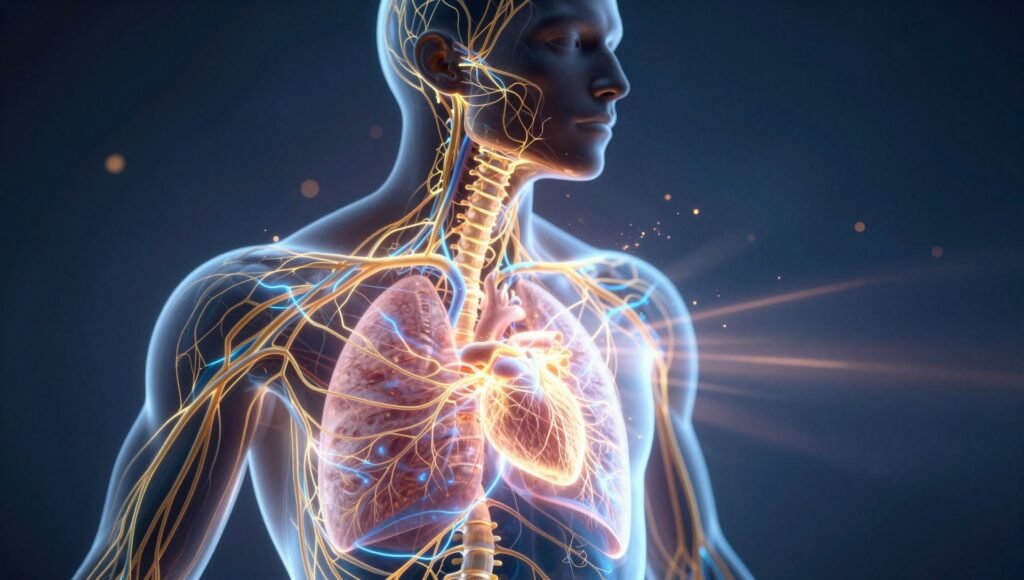
Immediate Physiological Responses
These include:
- Increased heart rate
- Elevated blood pressure
- Faster breathing
- Constriction of blood vessels
- Increased cardiac output
- Dilated pupils
- Enhanced alertness
These responses improve survival during emergencies but place additional strain on the cardiovascular system when triggered repeatedly over months or years.
4.3 The Hypothalamic-Pituitary-Adrenal (HPA) Axis
The HPA axis regulates the body’s hormonal response to stress.
Sequence of Activation
- Noise stimulates the hypothalamus.
- The hypothalamus releases corticotropin-releasing hormone (CRH).
- The pituitary gland secretes adrenocorticotropic hormone (ACTH).
- The adrenal cortex produces cortisol.
Cortisol is the body’s principal stress hormone. While essential in normal amounts, persistently elevated cortisol levels contribute to numerous chronic diseases.
4.4 Stress Hormones and Their Effects
Repeated environmental noise exposure increases circulating levels of several stress hormones.

Adrenaline (Epinephrine)
Adrenaline causes:
- Increased heart rate
- Elevated blood pressure
- Increased oxygen demand by the heart
- Narrowing of blood vessels
- Enhanced glucose release
Noradrenaline (Norepinephrine)
Noradrenaline contributes to:
- Vasoconstriction
- Sustained hypertension
- Increased vascular resistance
- Elevated workload on the heart
Cortisol
Chronic elevation of cortisol may lead to:
- High blood pressure
- Weight gain
- Insulin resistance
- Diabetes
- Suppressed immune function
- Sleep disturbance
- Depression
- Increased cardiovascular risk
4.5 Autonomic Nervous System Imbalance
The autonomic nervous system consists of:
- Sympathetic nervous system (stress response)
- Parasympathetic nervous system (rest and recovery)
Healthy individuals maintain a balance between these systems. Chronic noise exposure shifts this balance toward sympathetic dominance.
Consequences include:
- Reduced heart rate variability
- Persistent elevation of blood pressure
- Increased cardiac workload
- Reduced cardiovascular recovery during sleep
Reduced heart rate variability is an important marker of increased cardiovascular risk and has been associated with heart attacks, arrhythmias, and sudden cardiac death.
4.6 Oxidative Stress
One of the most important discoveries in environmental noise research is the role of oxidative stress. Oxidative stress occurs when the production of reactive oxygen species (ROS) exceeds the body’s antioxidant defenses.

Sources of Reactive Oxygen Species
- Mitochondrial metabolism
- Activated immune cells
- Endothelial cells
- Chronic inflammation
Excessive ROS damage:
- DNA
- Cell membranes
- Proteins
- Blood vessels
This damage contributes to aging and numerous chronic diseases.
Noise-Induced Oxidative Stress
Experimental studies have shown that chronic environmental noise increases oxidative stress, particularly within the vascular system. This damages the endothelium—the inner lining of blood vessels—and impairs normal vascular function.
4.7 Endothelial Dysfunction
The endothelium is a thin layer of cells lining the inside of all blood vessels. It plays a critical role in regulating:

- Blood flow
- Blood pressure
- Blood clotting
- Inflammation
- Vascular tone
Healthy endothelial cells produce nitric oxide (NO), a molecule that relaxes blood vessels and promotes adequate circulation.
Effects of Noise
Chronic noise exposure reduces nitric oxide availability through oxidative stress. As a result:
- Blood vessels become less flexible.
- Vasodilation is impaired.
- Blood pressure increases.
- Inflammation develops.
- Atherosclerosis accelerates.
Endothelial dysfunction is considered one of the earliest stages in the development of cardiovascular disease.
4.8 Inflammation
Inflammation is the body’s natural response to injury or infection. However, chronic low-grade inflammation contributes to many non-communicable diseases.
Repeated activation of stress pathways by environmental noise increases inflammatory mediators, including:
- C-reactive protein (CRP)
- Interleukin-6 (IL-6)
- Tumor necrosis factor-alpha (TNF-α)
These substances promote:
- Arterial plaque formation
- Endothelial injury
- Insulin resistance
- Thrombosis
Chronic inflammation is a key mechanism linking environmental noise to cardiovascular disease.
4.9 Effects on Blood Pressure
Blood pressure fluctuates naturally throughout the day. During sleep, it normally decreases by 10–20%, a phenomenon known as nocturnal dipping.

Environmental noise—especially at night—can interfere with this normal pattern.
Physiological Effects
Noise exposure may cause:
- Temporary spikes in blood pressure
- Increased nighttime blood pressure
- Reduced nocturnal dipping
- Sustained daytime hypertension
Individuals who fail to experience normal nighttime blood pressure reductions have a higher risk of:
- Stroke
- Heart attack
- Kidney disease
- Heart failure
4.10 Effects on Heart Rate
Noise exposure increases heart rate by stimulating the sympathetic nervous system.
Repeated elevations in heart rate:
- Increase oxygen demand by the heart
- Reduce recovery time
- Increase cardiac workload
- Promote arrhythmias in susceptible individuals
Even brief nighttime noise events can produce measurable increases in heart rate without awakening the individual.
4.11 Sleep as a Biological Recovery Process
Sleep is one of the body’s most important restorative processes. During healthy sleep:
- Heart rate decreases.
- Blood pressure falls.
- Stress hormone levels decline.
- Tissue repair occurs.
- Memory consolidates.
- Immune function improves.
Environmental noise disrupts these processes by causing repeated micro-arousals that fragment sleep architecture.
Consequences include:
- Reduced deep sleep
- Reduced REM sleep
- Daytime fatigue
- Mood changes
- Impaired concentration
- Increased cardiovascular stress
Chapter 5 will explore these effects in greater detail.
4.12 Metabolic Effects
Chronic activation of stress pathways affects metabolism.
Noise-induced hormonal changes may contribute to:
- Increased appetite
- Weight gain
- Central obesity
- Elevated blood glucose
- Insulin resistance
- Type 2 diabetes
These metabolic disturbances further increase cardiovascular risk.
4.13 Immune System Effects
Although acute stress may temporarily enhance immune responses, chronic stress caused by persistent environmental noise has the opposite effect.
Long-term consequences include:
- Impaired immune regulation
- Increased susceptibility to infections
- Delayed wound healing
- Persistent systemic inflammation
These changes may contribute to the progression of chronic diseases beyond the cardiovascular system.
4.14 Individual Susceptibility
Not everyone responds to environmental noise in the same way. Several factors influence biological sensitivity.
Age
Older adults often experience greater sleep disruption and cardiovascular effects.
Genetics
Genetic differences influence stress hormone responses and susceptibility to hypertension.
Existing Medical Conditions
Individuals with:
- Hypertension
- Coronary artery disease
- Diabetes
- Heart failure
may be more vulnerable to the adverse effects of chronic noise exposure.
Psychological Factors
People with anxiety, depression, or high perceived stress often report greater annoyance and stronger physiological responses to environmental noise.
Figure 4.1. Biological Pathway Linking Environmental Noise to Cardiovascular Disease
Environmental Noise
          │
          ▼
Brain Perception of Stress
          │
          ▼
Activation of SAM System & HPA Axis
          │
          ▼
Release of Adrenaline, Noradrenaline, and Cortisol
          │
          ▼
↑ Heart Rate    ↑ Blood Pressure
          │
          ▼
Oxidative Stress & Chronic Inflammation
          │
          ▼
Endothelial Dysfunction
          │
          ▼
Atherosclerosis
          │
          ▼
Hypertension → Coronary Artery Disease
          │
          ▼
Heart Attack • Stroke • Heart Failure
Key Takeaways
- Environmental noise activates the body’s stress response even without conscious awareness.
- Chronic stimulation of the sympathetic nervous system increases heart rate and blood pressure.
- Repeated activation of the HPA axis elevates cortisol, contributing to hypertension, metabolic dysfunction, and cardiovascular disease.
- Oxidative stress and chronic inflammation damage blood vessels and accelerate atherosclerosis.
- Endothelial dysfunction is a critical early step linking noise exposure to cardiovascular disease.
- Night-time noise prevents normal physiological recovery by disrupting sleep and impairing nocturnal blood pressure regulation.
- Individual susceptibility varies according to age, genetics, existing health conditions, and psychological factors.
Chapter Summary
Environmental noise is not merely an external nuisance—it is a biologically active stressor capable of altering multiple physiological systems. Through activation of the sympathetic nervous system and the hypothalamic-pituitary-adrenal axis, chronic noise exposure elevates stress hormones, promotes oxidative stress, triggers inflammation, and impairs endothelial function. These interconnected mechanisms contribute to hypertension, atherosclerosis, and other cardiovascular disorders. Appreciating these biological pathways provides a scientific foundation for understanding why reducing environmental noise is an important public health priority.


