



5. Check terminal tightness

Make sure the connections are secure. Do not overtighten them, because battery posts and terminals can be damaged.
6. Protect the terminals

After cleaning and reconnecting, apply a thin layer of battery-terminal protector or petroleum jelly around the terminal connection to help reduce future corrosion.
7. Check battery voltage
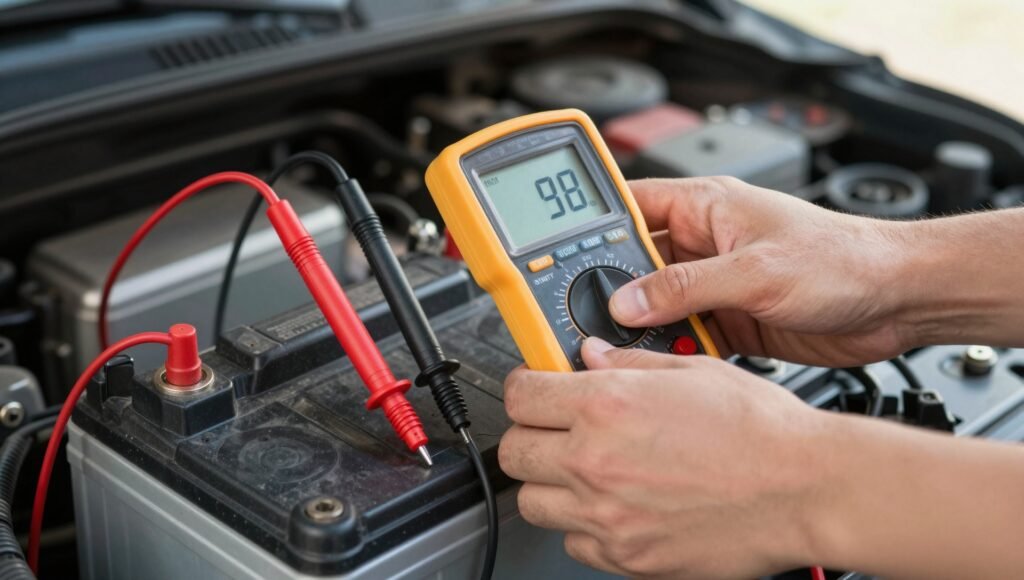
With the car switched off and the battery rested, use a digital multimeter to measure voltage. A healthy fully charged conventional 12-volt battery is typically around 12.6–12.8 V at rest. A substantially lower reading may indicate a discharged or aging battery.
8. Check the charging system
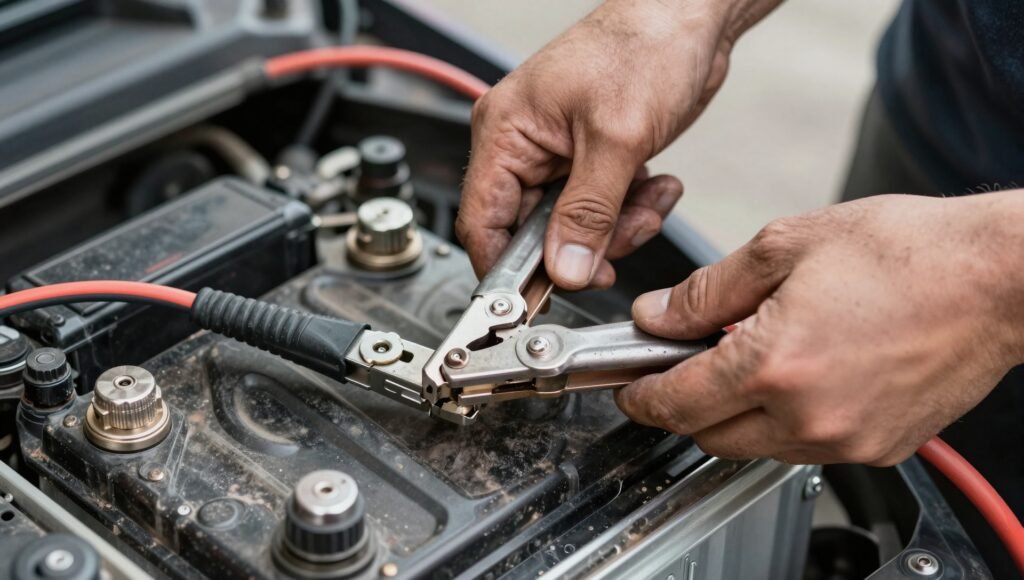
With the engine running, measure voltage again. Many conventional automotive charging systems will show roughly 13.5–14.7 V, although the correct range varies by vehicle and charging system. Always compare the reading with the manufacturer’s specification.
9. Recharge when necessary
If the battery is discharged, use a charger or smart battery maintainer appropriate for your battery type. Follow the charger’s instructions and never charge a visibly damaged or leaking battery.
10. Check periodically
Inspect the battery approximately once a month, particularly before long journeys. Also check it before periods of very hot or cold weather.


