




“Beneath the waves, sound becomes the language of the ocean—traveling farther, faster, and connecting marine life across vast underwater worlds.” 🌊🐋
Sound travels differently through various mediums, and water is no exception. In fact, sound propagates more efficiently in water than it does in air. This is due to water’s density, which allows sound waves to travel faster and farther. For underwater creatures, this phenomenon plays a crucial role in their communication and interaction. Underwater animals, including dolphins, whales, and various fish species, rely heavily on sound for communication. The efficiency of sound in water allows these creatures to exchange messages over long distances. For example, humpback whales sing complex songs that can be heard from miles away, facilitating communication across vast oceanic expanses. The way sound propagates in water not only benefits marine species but also has significant implications for humans. Researchers use sonar technology, which capitalizes on the efficient transmission of sound in underwater environments, for various purposes including mapping the ocean floor and detecting submarines. Understanding how sound travels underwater can, therefore, lead to advancements in both marine biology and oceanography.
Can We Hear Underwater Sounds in the Air?
Humans can hear sounds very well in air, but hearing sounds produced underwater becomes much more difficult when we are above the surface. This is because sound travels differently through air and water. Sound is a vibration that moves through a medium, such as air, water, or solid materials. When a sound travels from water into air, much of its energy is reflected at the water’s surface because water and air have very different physical properties.
If you are standing beside a swimming pool, you generally cannot clearly hear sounds happening deep underwater. The water’s surface acts as a strong barrier, preventing most underwater sound energy from entering the air. You may hear a faint or muffled sound if the underwater noise is very loud, but it will usually be much weaker than the original sound.
The situation is different when your ears are underwater. Human ears can detect underwater vibrations, although our hearing is not as effective underwater as it is in air. Sound travels faster through water—about four times faster than through air—but our ears and outer ear structures are adapted primarily for hearing in air. Underwater, sound may also appear to come from a less obvious direction because the usual way our ears locate sounds is affected.

This is why marine animals such as whales and dolphins have highly specialized systems for producing and detecting underwater sounds. Humpback whales, for example, use powerful vocalizations that can travel long distances through the ocean. Other whales and dolphins use sound for communication, navigation, and finding food.
Humans can also listen to underwater sounds using hydrophones, which are underwater microphones designed to detect and record sound in water. Scientists use hydrophones to study whales, dolphins, fish, earthquakes, and other underwater activity.
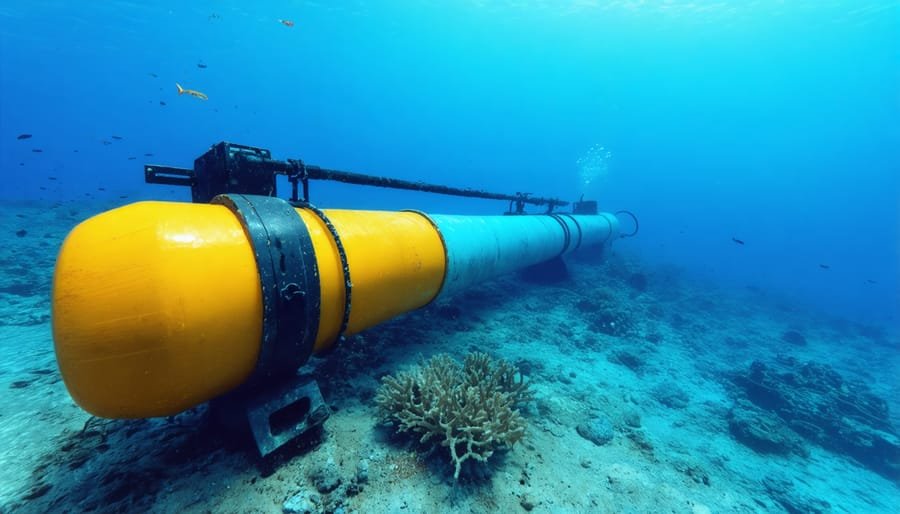
So, can we hear underwater sounds in normal air? Generally, not clearly. The water-air boundary reflects most underwater sound energy, making it difficult for our ears above the surface to detect. To hear the underwater world properly, we need to place our ears underwater or use specialized equipment such as a hydrophone. This difference in sound transmission helps explain why the underwater world can be so acoustically mysterious and why scientists rely on technology to explore its hidden sounds.


