




What Glacier is?
A glacier is a large, thick mass of ice that forms on land when snow accumulates over many years and becomes compressed into solid ice. Unlike ordinary snowfields, glaciers slowly move under their own weight, flowing downhill or outward like a very slow river of ice. They are found mainly in high mountains and polar regions, where temperatures remain low enough for snow and ice to persist year after year.
Glaciers are important parts of Earth’s climate and water system. They store enormous amounts of freshwater and gradually release meltwater into rivers and lakes, especially during warmer seasons. However, rising temperatures can cause glaciers to melt and retreat faster, increasing the risk of hazards such as glacial lake outburst floods (GLOFs) in mountain regions.
What happened to Nepal’s Glaciers?
On August 26, 2026, a devastating glacier-related disaster struck Nepal’s Rasuwa district near the Nepal–Tibet border. A large section of glacier and rock collapsed at high altitude, producing an enormous avalanche and temporarily blocking a river. The blockage then released a sudden surge of water, mud, rocks and ice into the Lhende Khola and Bhote Koshi river system, causing a catastrophic flash flood. The flood destroyed homes, roads, bridges, hydropower facilities and border infrastructure within minutes. (Nature)
The disaster has caused hundreds of deaths and more than a thousand people missing, although the figures are still changing as rescue teams reach isolated areas. Authorities are also concerned about newly formed debris-dammed lakes upstream, because another sudden breach could produce additional flooding. Scientists say the event demonstrates how unstable glaciers, melting ice and changing high-mountain conditions can create extremely dangerous cascading hazards in the Himalayas. (reuters.com)
Risk of Another ?
Risk of Another Glacier Disaster?
Yes. There is still a significant risk of another flood-related disaster in the Nepal–Tibet border region, but this does not necessarily mean that another glacier will collapse immediately. The August 26, 2026 disaster left debris blocking river channels and created temporary lakes. One such barrier lake has been rising and overflowing, creating the possibility of a secondary outburst flood if the unstable debris dam suddenly fails. (Reuters)
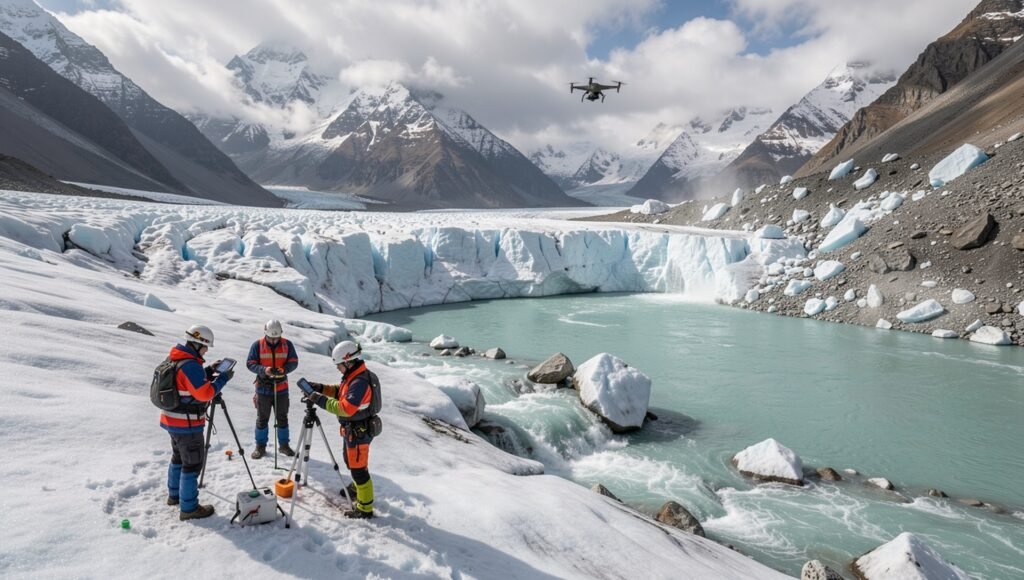
The bigger concern is that the Himalayas contain many unstable glaciers, steep slopes and glacial lakes. Scientists are therefore monitoring ice avalanches, landslides, rapidly expanding lakes and sudden changes in river levels. A new glacier collapse cannot currently be predicted to a specific date, but satellite monitoring, ground sensors and river-level warning systems can provide valuable early warnings. (AP News)


