


What Is Wood Oil?
Wood oil is a type of finishing product used to protect and enhance wooden surfaces. It penetrates into the wood fibers rather than simply forming a thick layer on top. Wood oil can bring out the natural grain and color of wood while helping protect it from drying, moisture, and everyday wear. Common types include tung oil, linseed oil, Danish oil, and specialized furniture oils.
Where Is Wood Oil Found?
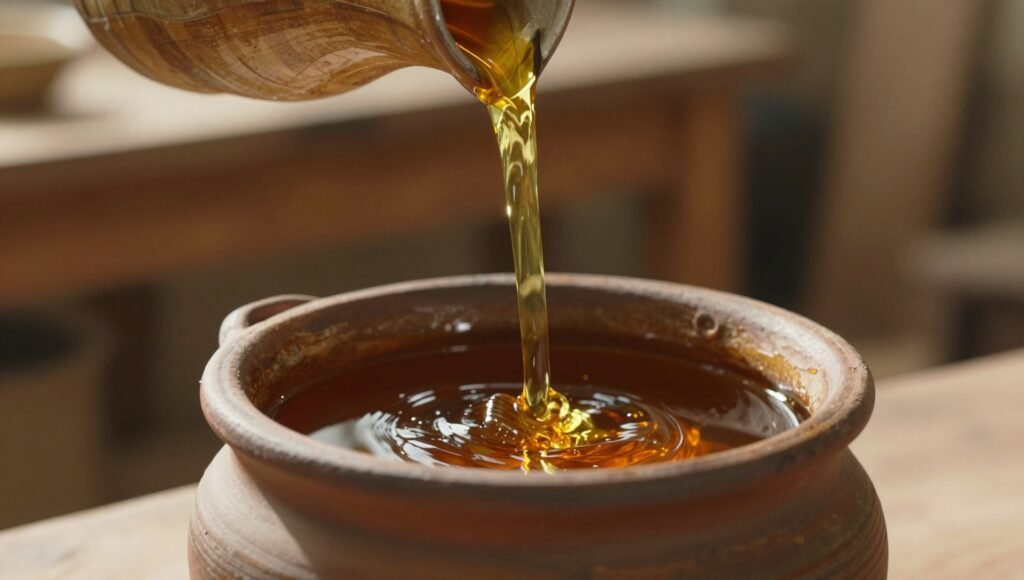
Wood oil is commonly found in hardware stores, woodworking shops, home-improvement stores, paint stores, and online marketplaces. Different oils are formulated for different purposes, so the label should be checked before purchasing. Some products are intended for indoor furniture, while others are formulated for outdoor wood, cutting boards, floors, or garden furniture. Pure oils and commercial wood-finishing oils may have significantly different properties.
Where Is Wood Oil Used?
Wood oil is widely used on wooden furniture, shelves, tables, doors, decorative objects, wooden tools, and DIY projects. It is particularly useful when you want to preserve the natural appearance and grain of wood rather than covering it completely with paint. For a DIY wooden candle holder, for example, an appropriate wood oil can give the finished piece a warm appearance and help protect the surface. Always allow the oil to dry according to the manufacturer’s instructions, and keep oil-soaked cloths safely managed because some drying oils can cause spontaneous combustion if improperly stored.
Wood oil is produced from either natural plant oils or specially formulated blends designed to protect wooden surfaces. Common natural oils include linseed oil, obtained from flax seeds, and tung oil, obtained from the seeds of the tung tree. In commercial wood finishes, these oils may be refined, heat-treated, or combined with resins, solvents, drying agents, or other ingredients to improve drying time, durability, water resistance, and appearance.
The basic production process begins with collecting and cleaning the oil-bearing seeds. The seeds are then crushed or pressed to extract the oil. Depending on the desired quality, the extracted oil may be filtered and refined to remove impurities. Some oils are further processed through controlled heating or other treatments to change their drying and finishing properties. Commercial manufacturers then formulate the oil into a product suitable for particular applications, such as furniture, flooring, outdoor wood, or decorative objects.
Modern wood-oil production focuses on achieving a balance between penetration, protection, appearance, durability, and drying time. Manufacturers may produce clear, tinted, matte, or glossy finishes. Some modern products are marketed as low-VOC or environmentally preferable formulations. The finished oil is tested for characteristics such as drying time, surface protection, water resistance, and compatibility with different types of wood before being packaged and sold.