


What Are Clamps?
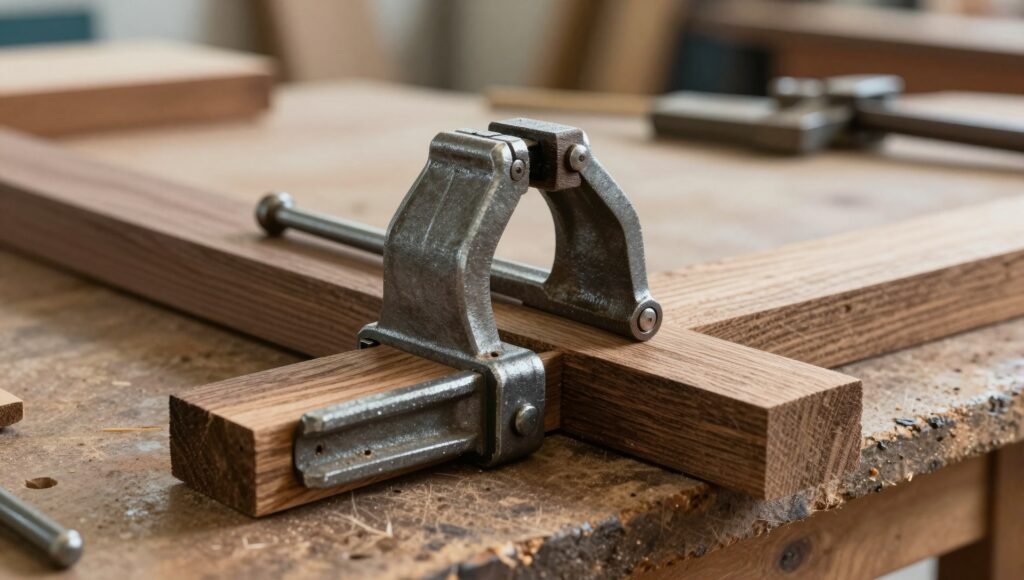
Clamps are tools used to hold, grip, press, or secure two or more objects together so they do not move while you are working on them. They are especially useful in woodworking, metalworking, construction, repairs, crafting, and DIY projects.
A clamp usually has two gripping surfaces called jaws. These jaws can be tightened around a workpiece using a screw, lever, spring, or other mechanism. Clamps come in many sizes and designs depending on the type of work being performed.
Uses of Clamps
- Woodworking – Clamps hold wooden pieces together while glue dries.
- Furniture making – They keep boards, frames, and joints firmly positioned during assembly.
- Cutting wood – A clamp can secure a board to a workbench while it is being cut.
- Drilling – Clamps prevent materials from moving while drilling holes.
- Sanding – They hold a workpiece securely while its surface is being sanded.
- DIY projects – Useful for making shelves, boxes, candle holders, frames, and other handmade items.
- Metalworking – Clamps can hold metal pieces in position during cutting, drilling, or welding.
- Repair work – They temporarily hold broken or loose parts together during repair.
- Gluing – Clamps apply pressure to glued joints, helping create a stronger bond.
- Construction – Larger clamps are used to position and secure building materials.
Common Types of Clamps
- C-clamp – Strong and simple; commonly used for woodworking and metalworking.
- Bar clamp – Useful for holding large pieces of wood.
- Spring clamp – Quick to operate and useful for light-duty jobs.
- Pipe clamp – Often used for large woodworking projects.
- Quick-grip clamp – Can be operated easily with one hand.
- Corner clamp – Helps hold two pieces at a precise angle, usually 90°.
For a DIY woodworking project, clamps are particularly important because they keep pieces stable and accurately positioned while you cut, drill, sand, or glue them.