

You can assemble simple electronic circuits using basic components such as resistors, capacitors, diodes, LEDs, switches, and batteries. These circuits are excellent for beginners because they help you understand how electrical current, voltage, resistance, and component behavior work together. Components can be connected on a breadboard without soldering, making it easy to build, test, and modify different circuit arrangements.
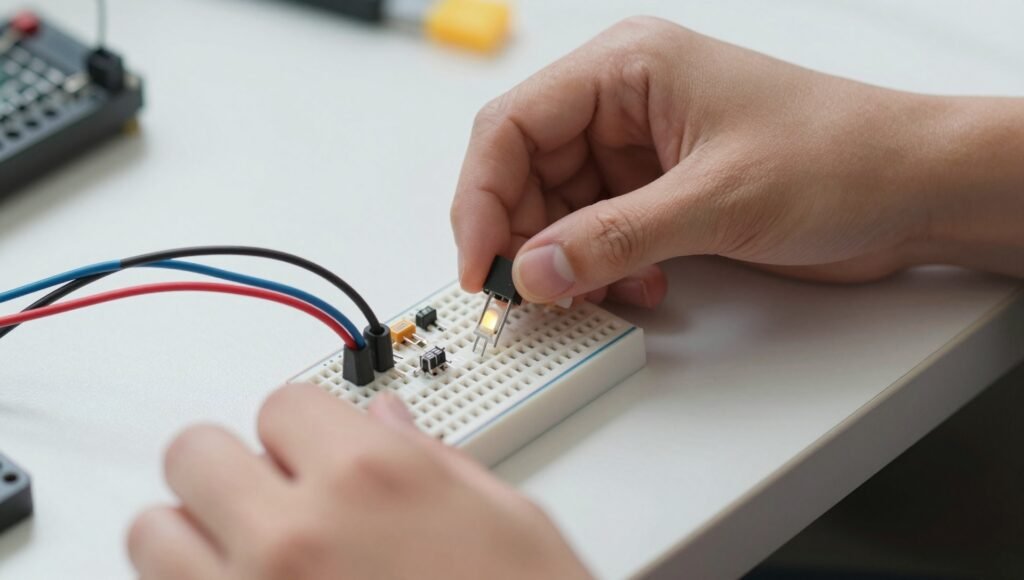
For example, a resistor and LED circuit can be assembled to learn how a resistor limits current and protects the LED. A capacitor circuit can demonstrate how a capacitor stores and releases electrical energy, while a diode circuit can demonstrate one-way current flow. You can also combine these components to make simple circuits such as LED indicators, timing circuits, rectifier circuits, light-sensitive circuits, and basic filters.
Building these circuits is a useful practical exercise before moving to more advanced electronics repair. You can use a low-voltage DC battery or suitable DC power supply, breadboard, jumper wires, multimeter, and basic components. Start with simple circuits, check component polarity where applicable, and verify the circuit before applying power. This hands-on practice helps develop the ability to read circuit diagrams, identify components, connect them correctly, and troubleshoot simple electronic faults.