

Basic electronics repair means identifying and fixing simple problems in electronic devices, circuits, wires, connectors, switches, and components. It generally involves inspecting the device, finding loose or damaged connections, testing components, and replacing faulty parts. Basic repair work can often be performed with simple tools such as a multimeter, soldering iron, desoldering pump, wire cutter, screwdriver, and tweezers.
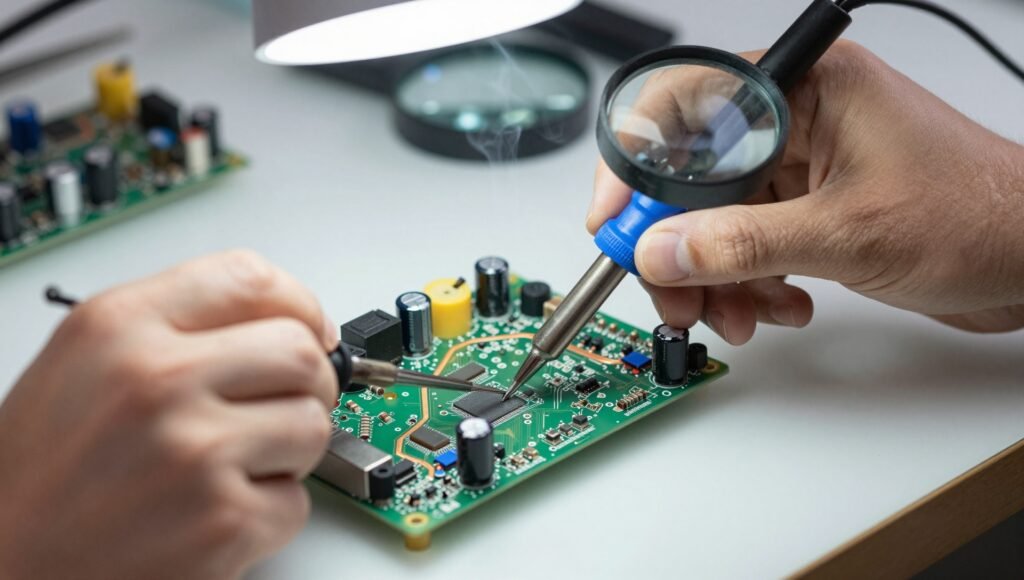
Many common repairs can be done at a basic level. These include replacing damaged wires, repairing loose solder joints, changing connectors, replacing switches, replacing fuses, fixing battery connections, and replacing simple electronic components such as resistors, capacitors, LEDs, and some diodes. Small PCB repairs may also include removing excess solder, repairing broken tracks with suitable techniques, and resoldering components that have become loose.
Basic electronics repair is useful for DIY projects, household electronics, hobby circuits, toys, small appliances, cables, and educational electronic kits. However, devices connected directly to mains electricity, high-voltage equipment, lithium-battery packs, televisions, power supplies, and other high-energy circuits require greater knowledge and appropriate safety precautions. Before working on any device, disconnect it from its power source and make sure potentially dangerous capacitors or other energy-storage components are safely discharged.